

TL;DR
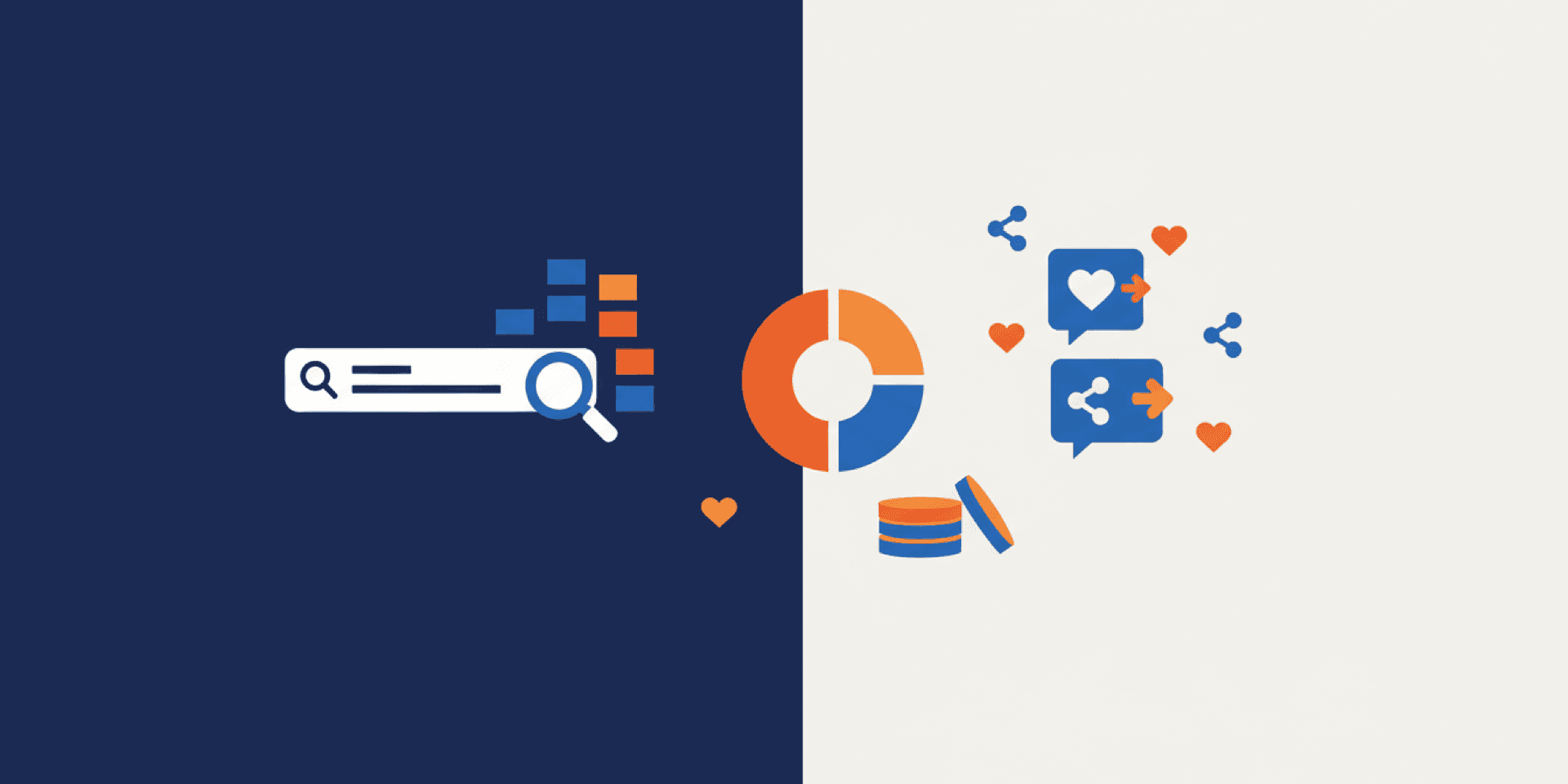
Google Ads captures people actively searching for what you offer. Social media ads put your brand in front of people who fit your audience profile but are not actively looking. Most businesses need both, but the ratio depends on your industry, sales cycle, and goals. Start with the channel that matches how your customers buy, test aggressively, and let the data guide your budget allocation — not assumptions.
The Fundamental Difference: Intent vs Interruption
Understanding this one distinction will save you thousands of dollars in wasted ad spend.
Google Ads is intent-based. Someone types “commercial HVAC repair near me” into Google. They have a problem right now. They are looking for a solution right now. Your ad appears at the moment of highest purchase intent. You are answering a question they already asked.
Social media ads are interruption-based. Someone is scrolling through Instagram, watching a friend’s vacation photos, and your ad for commercial HVAC services appears in their feed. They were not thinking about HVAC. You are introducing an idea they were not looking for.
Neither approach is inherently better. They serve different purposes at different stages of the buyer’s journey. The mistake is treating them as interchangeable.
When Google Ads Works Best
Google Ads excels when there is existing demand for what you offer. If people are already searching for your product or service, Google puts you directly in front of them.
High-intent services: Emergency services, professional services (lawyers, accountants, plumbers), and B2B solutions where the buyer knows what they need and is comparing options. These searches indicate readiness to act.
Established product categories: If people already know the product exists and are searching for it by name or category, Google captures that demand efficiently. Think “best CRM software” or “running shoes for flat feet.”
Local businesses: Google’s local search and Maps integration make it powerful for businesses that serve a specific geographic area. “Italian restaurant downtown” or “yoga studio near me” searches convert at high rates.
Measurable ROI with short sales cycles: When someone searches, clicks your ad, and converts in the same session or within a few days, Google Ads delivers clean attribution. You know exactly what you spent and what you earned. According to Google’s economic impact data, businesses average $2 in revenue for every $1 spent on Google Ads — though results vary significantly by industry and execution quality.
When Social Media Ads Work Best
Social advertising shines when you need to create demand, build awareness, or reach people based on who they are rather than what they are searching for.
New products and categories: If people do not know your product exists, they cannot search for it. Social ads introduce your offering to audiences who match your ideal customer profile.
Visual and lifestyle products: Fashion, food, travel, fitness, and home decor sell well on visual platforms like Instagram and Pinterest. The product is its own advertisement when presented well.
Audience targeting based on demographics and interests: Social platforms know an enormous amount about their users — job titles, interests, life events, purchase behavior. This lets you target with precision that search keywords cannot match. Want to reach CFOs at companies with 50-200 employees who recently engaged with content about financial planning software? LinkedIn can do that.
Retargeting and nurturing: Someone visited your pricing page but did not convert. Social retargeting ads keep your brand visible as they continue their daily browsing. This is especially valuable for longer sales cycles where the decision takes weeks or months.
Brand building: Social advertising builds familiarity over time. Even when someone does not click, repeated exposure to your brand creates recognition. When they eventually need what you offer, yours is the name they remember.
Platform Comparison: Where to Spend
Not all ad platforms are equal. Each has strengths tied to specific business types and goals.
Google Search: Best for capturing high-intent demand. Works across nearly every industry. Pay-per-click means you only pay when someone shows interest. The challenge is competition — popular keywords are expensive.
Google Display Network: Broader reach, lower cost per impression, weaker intent. Good for awareness campaigns and retargeting. Less effective for direct response than Search.
YouTube Ads: Video-first advertising. Effective for brand storytelling, product demonstrations, and reaching audiences consuming long-form content. Costs less per view than most assume.
Meta (Facebook and Instagram): The most versatile social platform. Excellent targeting, strong retargeting capabilities, and the broadest demographic reach. Works for B2C and many B2B applications. Instagram skews younger and more visual.
LinkedIn: The clear winner for B2B advertising. Targeting by job title, company size, industry, and seniority is unmatched. Cost per click is significantly higher than other platforms, but the lead quality often justifies the premium.
TikTok: Rapidly growing ad platform with strong engagement rates. Best for brands targeting younger demographics with creative, authentic content. The platform rewards ads that do not look like ads.
Budget Allocation by Business Type
Here are general starting points. These are not rules — they are informed starting positions to test from.
Local service businesses (plumbers, dentists, lawyers): Start with 70% Google Search, 30% social retargeting. These businesses thrive on capturing existing demand in their service area.
E-commerce brands: Start with 50% social (Meta/Instagram), 30% Google Shopping, 20% Google Search. Visual products sell well on social, and Shopping ads capture high-intent product searches.
B2B SaaS: Start with 40% Google Search, 40% LinkedIn, 20% retargeting across platforms. Capture the demand that exists via search, and use LinkedIn to reach decision-makers who are not actively searching yet.
Direct-to-consumer brands: Start with 60% social (Meta/Instagram/TikTok), 25% Google Search, 15% YouTube. Building brand awareness and social proof drives these businesses.
How to Test and Measure Effectively
The biggest mistake in paid advertising is setting a budget, launching campaigns, and hoping for the best. Structured testing separates profitable ad programs from expensive experiments.
- Start with one platform. Master it before spreading your budget across three or four channels. A $3,000 monthly budget split across five platforms accomplishes nothing. The same budget focused on one platform can deliver meaningful data.
- Define your cost-per-acquisition target. What is a lead or customer worth to your business? Work backward from that number to set your maximum acceptable cost per click and conversion rate requirements.
- Test creative aggressively. Most campaigns underperform because of weak ad creative, not bad targeting. Run three to five ad variations simultaneously and let performance data pick the winner.
- Give campaigns time. Both Google and social platforms use machine learning to optimize delivery. Changing campaigns every two days does not give the algorithm time to learn. Plan for two to four week test periods.
- Track the full funnel. Clicks and impressions are vanity metrics. Track cost per lead, cost per customer, and return on ad spend. If you cannot connect ad spend to revenue, fix your tracking before increasing budget.
Real Budget Scenarios
$2,000/month starter budget: Focus on one primary platform. If you have existing search demand, start with Google Search targeting your highest-converting keywords. If you are building awareness for a new brand, start with Meta ads targeting your ideal customer profile. Reserve 10-15% for retargeting.
$5,000-$10,000/month growth budget: Split across two platforms based on the business type ratios above. Run structured A/B tests on creative and landing pages. Implement full-funnel tracking with conversion attribution.
$15,000+/month scaling budget: Multi-platform strategy with dedicated budgets per channel. Advanced audience segmentation. Video creative. Automated bid strategies. Regular reporting cadence with clear KPIs.
The right answer for your business depends on your margins, average order value, customer lifetime value, and sales cycle length. There is no universal formula — just a framework for testing your way to the right allocation.
At Project Assistant, we build paid advertising strategies based on your actual business economics, not platform defaults. If you are spending on ads but not sure whether your budget is allocated effectively, or if you are ready to start but overwhelmed by the options, we can help you build a testing plan that turns ad spend into measurable revenue.