

TL;DR
Choosing the wrong mobile app development partner costs more than money — it costs time, momentum, and market opportunity. Look for a partner with a proven portfolio, a transparent process, strong communication habits, and a plan for what happens after launch. Ask hard questions upfront. Skip the red flags. Your app’s success depends on it.
Your App Is Only as Good as the Team Behind It
Building a mobile app is one of the biggest investments a business can make. The average cost for a quality app ranges from $50,000 to $250,000 or more, and the timeline from concept to launch typically spans four to nine months. With stakes that high, the partner you choose to build it with matters more than any single feature on your roadmap.
Yet most business owners choose a development partner based on price, a flashy portfolio, or a referral from someone who “knows a guy.” That’s how six-figure projects end up stalled, over budget, or delivered with critical flaws.
This guide covers exactly what to look for, what to avoid, and what questions to ask before you sign anything.
What to Look For in a Development Partner
A Portfolio That Proves Capability
Every agency has a portfolio. The question is whether it demonstrates relevant experience. Look for apps similar to what you want to build — not just in industry, but in complexity. A partner who has built social networking features, payment integrations, or real-time data syncing has solved the hard problems before.
Don’t just look at screenshots. Ask if you can download and use the live apps. The real test is how the app feels in your hand. Is it smooth? Is navigation intuitive? Does it crash? A polished case study means nothing if the actual product is buggy.
A Defined, Transparent Process
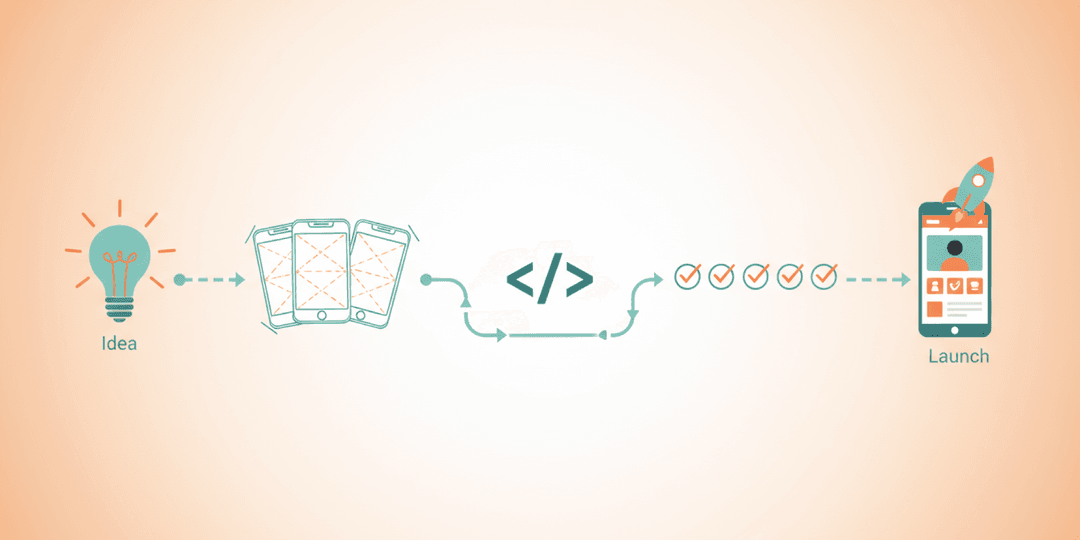
A strong development partner can explain their process before you ask. Discovery. Strategy. Design. Development. Testing. Launch. Post-launch support. Each phase should have clear deliverables and timelines.
Be wary of partners who jump straight into coding without a discovery phase. Skipping discovery is the single most common reason projects go sideways. Without understanding your users, your business model, and your technical requirements, even talented developers will build the wrong thing.
Communication That Works for You
How a partner communicates during the sales process is a preview of how they’ll communicate during the project. Do they respond quickly? Do they ask thoughtful questions? Do they explain technical decisions in terms you understand?
Ask about their communication cadence. Weekly status updates should be the minimum. Regular demo sessions where you see working software — not just slide decks — are even better. You should never go more than two weeks without seeing progress.
Post-Launch Support and Maintenance
Launch day is not the finish line. It’s the starting line. Your app will need bug fixes, OS updates, feature additions, and performance monitoring. Ask your potential partner what happens after launch. Do they offer maintenance plans? What’s their response time for critical bugs? Will the same team that built the app maintain it?
A partner who disappears after launch leaves you stranded. A partner who plans for ongoing support is invested in your long-term success.
Technical Depth and Platform Expertise
There are real tradeoffs between native development (Swift for iOS, Kotlin for Android) and cross-platform frameworks (React Native, Flutter). A good partner will explain these tradeoffs honestly, based on your specific needs, rather than defaulting to whatever technology their team prefers.
Ask about their testing practices, code review standards, and how they handle security. As Smashing Magazine’s performance checklist emphasizes, performance and quality standards need to be baked into the development process, not bolted on at the end.
Red Flags to Watch For
- Fixed price with no discovery phase. If someone quotes you a firm price before understanding your requirements, they’re either padding heavily or planning to cut corners.
- No dedicated project manager. You should have a single point of contact who knows your project inside and out. If you’re being bounced between people, accountability will suffer.
- Reluctance to share references. Any reputable partner should happily connect you with past clients. If they can’t or won’t, ask why.
- Outsourcing without disclosure. Some agencies present themselves as in-house teams but quietly outsource development. There’s nothing inherently wrong with distributed teams, but you deserve to know who’s actually building your product.
- Vague timelines. “It depends” is not a timeline. A good partner provides phase-by-phase estimates with clear milestones.
- No mention of testing or QA. If quality assurance isn’t part of their standard process, expect bugs. Lots of them.
10 Questions to Ask Before You Commit
- Can I speak with two or three of your recent clients?
- What does your discovery process look like?
- Who will be on my project team, and what are their roles?
- How do you handle scope changes or feature additions mid-project?
- What’s your testing and quality assurance process?
- Do you offer post-launch maintenance and support?
- What technology stack do you recommend, and why?
- How will you communicate progress and handle blockers?
- Who owns the code and intellectual property?
- What happens if the project goes over budget or timeline?
The answers to these questions will tell you everything you need to know. A confident partner welcomes scrutiny. A shaky one deflects.
The Cost of Getting It Wrong
Choosing the wrong partner doesn’t just waste your budget. It wastes months of time. It delays your go-to-market. It burns out your internal team dealing with miscommunication and missed deadlines. And in the worst cases, it leaves you with a codebase so poorly built that starting over is cheaper than fixing it.
We’ve seen businesses come to us after failed partnerships with codebases that couldn’t scale, apps that crashed under real user load, and architectures that made simple feature additions take weeks instead of days. The common thread: they chose based on price rather than capability.
Making Your Decision
The right development partner feels like an extension of your team. They challenge your assumptions constructively. They communicate proactively. They care about your business outcomes, not just deliverables.
Take your time with this decision. Talk to multiple firms. Check references. Review live products, not just case studies. The investment you make in choosing the right partner pays dividends throughout the entire lifecycle of your app.
At Project Assistant, we guide clients through every phase of mobile app development — from initial strategy through post-launch optimization. If you’re evaluating partners for your next app project, we’d welcome the conversation.