

You’ve spent months building your product with AI tools, no-code platforms, or a favor from a developer friend. Now you’re staring at something that almost works — and you’re wondering what it would actually cost to build it right.
You’re not alone. Most entrepreneurs we talk to have already invested real time and money before they reach out. The question isn’t whether professional development costs more than DIY. It’s whether the investment makes sense compared to what you’ve already spent — and what you’re losing every month your product isn’t performing.
This guide gives you honest numbers, practical ranges, and a framework for thinking about your software development budget in 2026.
TL;DR
Professional software development typically costs $15,000–$75,000 for a custom web application, but AI-powered agencies can deliver the same quality for 30–50% less than traditional shops. Your DIY phase wasn’t free — those 200 hours had a real cost. Budget for architecture, security, testing, and deployment, not just features. Plan for ongoing maintenance at 15–20% of your initial build cost annually. The real question isn’t what it costs to build. It’s what it costs you every month that your product isn’t working properly.
Your DIY Budget Wasn’t Free
Let’s start with an uncomfortable truth. That “free” prototype you built? It cost more than you think.
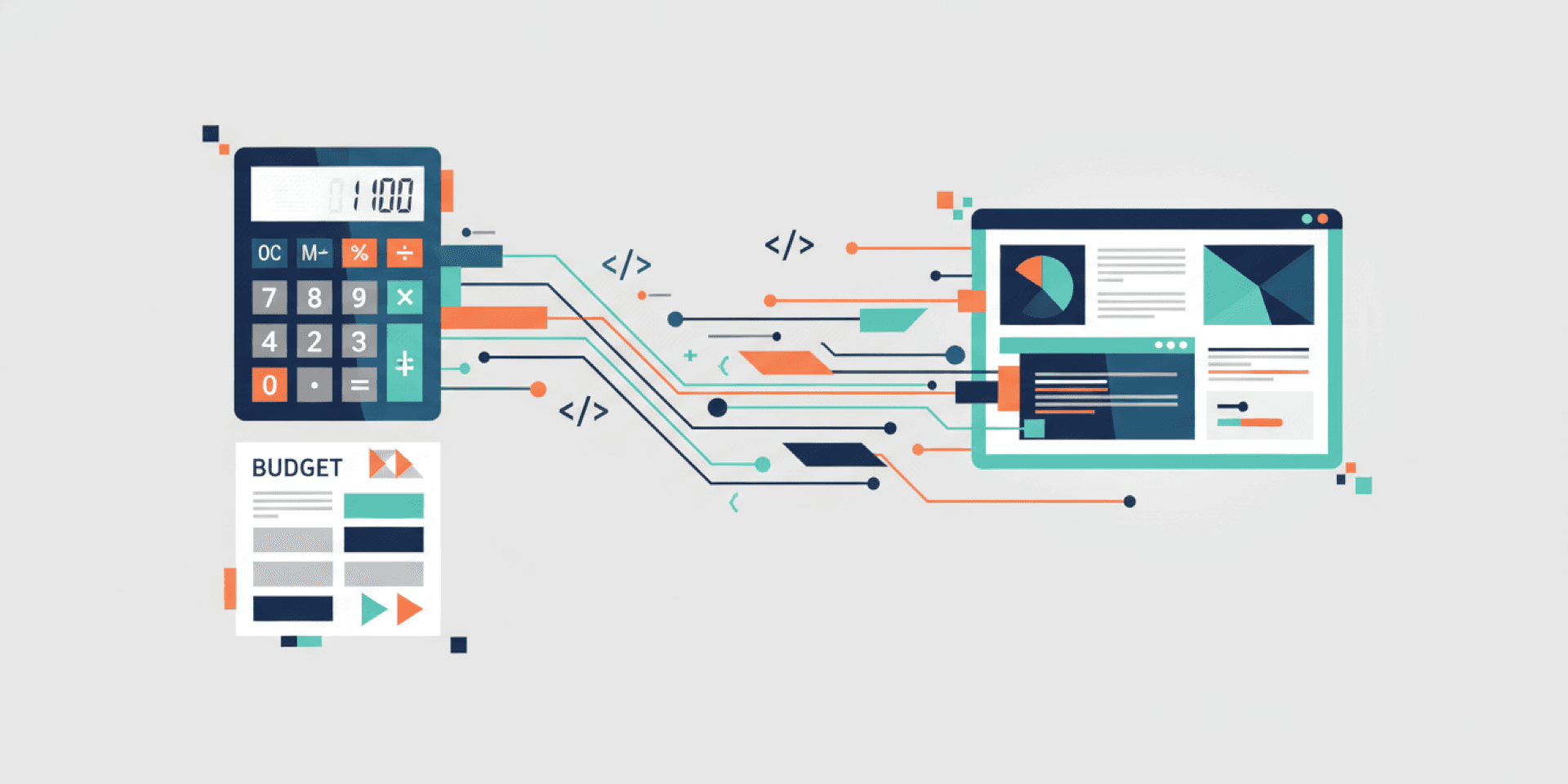
If you spent 200 hours on a no-code builder or AI prototyping tool, and your time is worth $75 an hour as a founder, that’s $15,000 in opportunity cost. Add subscription fees, plugin purchases, and the occasional freelancer — and you’re looking at $18,000–$25,000 that produced something you can’t confidently put in front of customers.
We’re not saying that money was wasted. Prototyping clarifies your thinking. But you need to account for it honestly when planning what comes next. According to CB Insights research, 38% of startups fail because they run out of cash — often because they underestimated their true development costs from the beginning.
What Professional Development Actually Costs
Here’s where most budgeting guides fail you. They say “it depends” and leave you guessing. We’ll give you real ranges.
For a custom web application in 2026, here’s what to expect:
- Simple web app (landing page with integrations, basic user accounts, one core feature): $15,000–$30,000
- Mid-complexity app (multiple user roles, payment processing, third-party integrations, admin dashboard): $30,000–$55,000
- Complex platform (marketplace functionality, real-time features, advanced security requirements, API ecosystem): $55,000–$75,000+
These ranges come from traditional agency pricing. We’ll get to how AI-powered development changes the math in a moment.
But first, understand what you’re paying for. It’s not just code. A study from the National Institute of Standards and Technology found that fixing a bug after deployment costs 30 times more than catching it during development. That’s why professional builds include architecture planning, security hardening, automated testing, deployment infrastructure, and documentation. These aren’t extras. They’re the difference between software that works on launch day and software that falls apart at 80% complete.
How AI-Powered Development Changes the Math
Traditional development has always forced a painful tradeoff. We explored this in our article on how AI breaks the iron triangle — the old rule that you can only pick two of three: fast, good, or affordable.
AI-powered agencies don’t cut corners. They cut inefficiency. Here’s how that changes your budget:
Architecture and planning still requires senior expertise. AI assistants accelerate research and documentation, but human judgment drives the decisions. Budget impact: 10–15% savings.
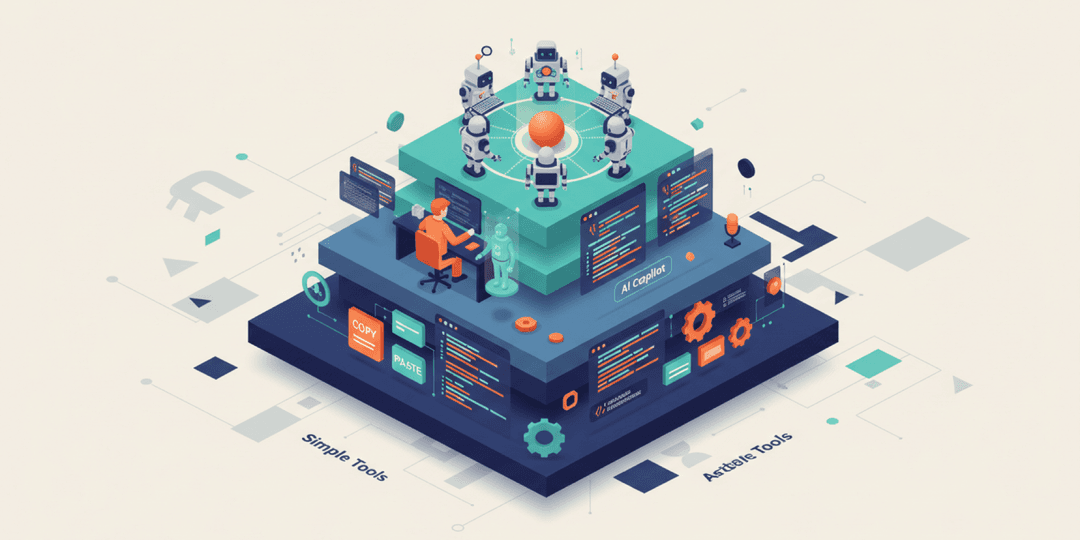
Implementation is where AI shines brightest. AI coding assistants handle routine code generation, boilerplate, and pattern-matching work while developers focus on business logic and edge cases. Budget impact: 30–40% savings on development hours.
Testing and quality assurance benefits enormously from automation. Automated testing catches issues that manual review misses, and quality checks actually speed up delivery instead of slowing it down. Budget impact: 20–30% savings.
The net result? An AI-powered agency can typically deliver the same scope and quality for 30–50% less than a traditional shop. That mid-complexity app that costs $30,000–$55,000 traditionally? Expect $18,000–$35,000 from an agency that’s genuinely integrated AI into its workflow — not just using it as a marketing buzzword.
Understanding what AI-powered development actually means matters here. There’s a big difference between a developer using autocomplete and an agency with specialized AI assistants embedded across their entire development workflow.
The Maintenance Budget Nobody Mentions
Your app doesn’t end at launch. This is where DIY projects silently bleed money — and where professional builds prove their value.
Plan for ongoing costs in these categories:
- Hosting and infrastructure: $50–$500/month depending on scale
- Security updates and patches: Critical and non-negotiable
- Bug fixes and minor improvements: Things break. Users find edge cases.
- Performance monitoring: Slow software loses customers
- Feature iterations: Your first version won’t be your last
Industry standard is to budget 15–20% of your initial build cost annually for maintenance. A $30,000 build means $4,500–$6,000 per year in ongoing care. According to Gartner’s IT spending research, organizations typically spend about 70% of their IT budget on maintaining existing systems. For startups, that ratio should be much lower — but zero is not realistic.
In the final article of this series, we’ll cover why your app doesn’t end at launch — and why that’s actually a good thing.
The ROI Question You Should Be Asking
Here’s the budget conversation most people get wrong. They ask, “Can I afford to build this?” The better question is, “Can I afford not to?”
Calculate your monthly cost of delay:
- Revenue you’re not earning because your product isn’t live
- Customers you’re losing to competitors who shipped first
- Hours you’re still spending patching your DIY solution instead of growing your business
- Brand damage from a product that feels unfinished
If your product should generate $10,000 per month and you’ve been delayed six months by DIY struggles, that’s $60,000 in lost revenue. Suddenly a $25,000 professional build looks like the bargain it is.
Before you sign with any agency, make sure you’re asking the right questions about their process, pricing model, and how they handle scope changes.
A Practical Budget Framework
Here’s how to structure your thinking:
- Acknowledge sunk costs. Add up what you’ve already spent (time and money). Don’t throw good money after bad on a broken foundation.
- Define your MVP honestly. Not every feature needs to be in version one. A good agency will help you prioritize.
- Get three quotes. Compare traditional agencies, AI-powered agencies, and freelance teams. Look at total cost, not just hourly rates.
- Budget for the full picture. Initial build + three months of post-launch support + hosting. That’s your real number.
- Factor in speed to market. A faster delivery means earlier revenue. Time savings have dollar values.
FAQ
Is it cheaper to fix my existing DIY build or start over?
It depends on your foundation. If your prototype was built on a no-code platform with limited scalability, starting fresh is usually more cost-effective. If you have clean code that just needs professional architecture, rebuilding on top of it can save 20–30%. A good agency will audit what you have and give you an honest answer — not just sell you a full rebuild.
How do I know if an agency’s AI claims are real?
Ask for specifics. How does AI fit into their development workflow? Do they use automated quality assurance throughout the build? Can they show you how their process differs from traditional development? Vague answers like “we use AI tools” should raise red flags.
What’s the biggest hidden cost in software development?
Scope creep — changing requirements mid-build. It’s responsible for more budget overruns than any other factor. Protect yourself by investing in thorough requirements before a single line of code is written. Agencies that rush past the planning phase will cost you more in the end.
Should I pay fixed-price or hourly?
Fixed-price works best when your scope is clearly defined. Hourly works better for ongoing iteration and discovery. Many AI-powered agencies offer hybrid models: fixed-price for the core build with hourly rates for additions. Get the payment structure in writing before you start.
The Bottom Line
Building software right costs real money. But building it wrong costs more — in wasted time, lost revenue, and the frustrating cycle of fixing what should have been solid from the start.
The best value in 2026 is an AI-powered agency that combines senior expertise with intelligent automation. You get professional architecture, comprehensive quality assurance, and faster delivery — without the traditional agency price tag.
Your budget isn’t just a number on a spreadsheet. It’s an investment in finally having a product that works, scales, and earns.
Ready to get real numbers for your project? Let’s talk about what your build actually requires — and what it should actually cost.