

Every agency on earth says they use AI now. Most of them are stretching the truth far enough that it snaps. If you’re an entrepreneur trying to figure out who actually does AI-powered development versus who just slapped a buzzword on their homepage, this guide is for you.
TL;DR
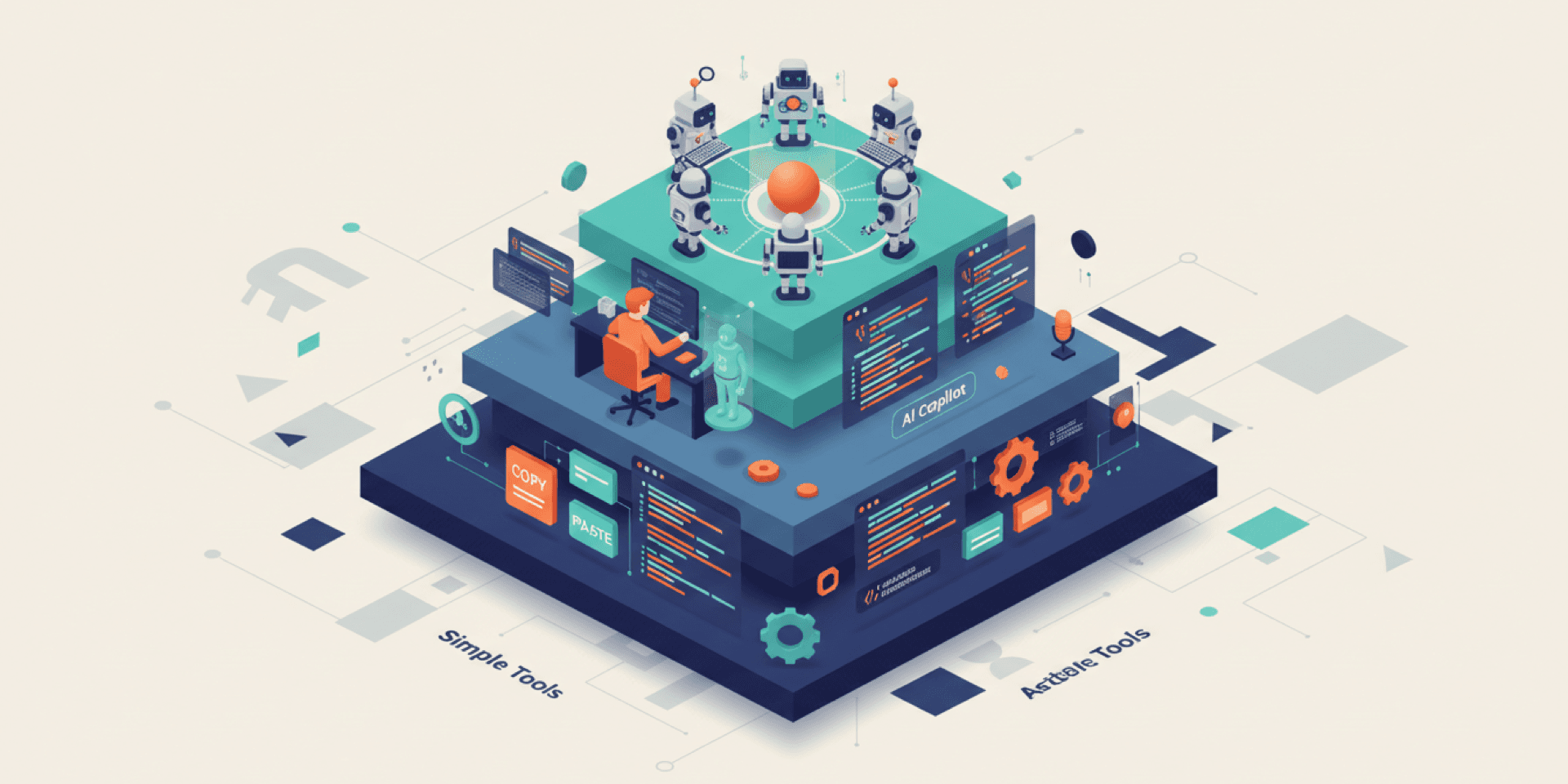
There are three tiers of “AI-powered” agencies. Tier one copies and pastes code from chatbots — that’s not AI-powered development. Tier two uses AI coding assistants as copilots — better, but still just the beginning. Tier three has built custom development workflows where specialized AI assistants handle distinct tasks like requirements analysis, automated testing, code review, and quality audits — all coordinated through a structured process with human oversight at every decision point. When you’re evaluating agencies, ask which tier they’re actually operating at.
The phrase everyone uses, nobody explains
“We use AI in our development process.”
You’ve seen this on agency websites. Maybe a dozen of them. But what does it actually mean? Are they pasting code from a chatbot? Using an AI coding assistant? Or have they built something fundamentally different?
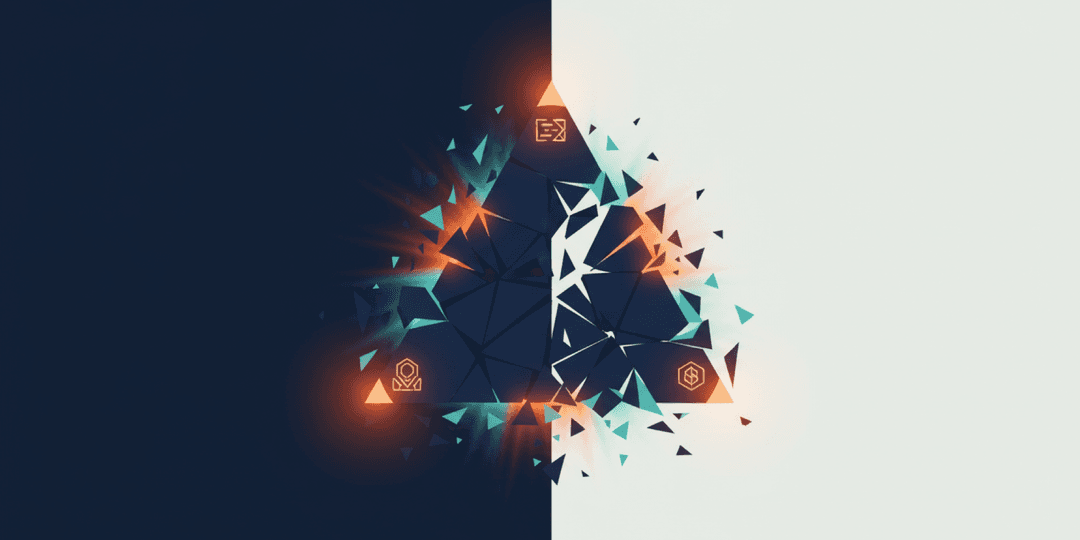
The answer matters. The gap between the worst and best version of “AI-powered development” is the difference between a developer Googling faster and breaking the iron triangle of quality, speed, and cost.
Here are the three tiers as they actually exist today — and how to tell which one you’re being sold.
Tier one: copy-paste from a chatbot
The most common version. A developer opens ChatGPT, describes what they need, copies the generated code, and pastes it into the project. Sometimes it works. Sometimes it doesn’t.
There’s nothing inherently wrong with this. But calling it “AI-powered development” is like calling yourself a chef because you use a microwave.
The code from a chatbot has no context about your project. It doesn’t know your database structure, your authentication setup, or your deployment environment. It doesn’t run tests or check for security vulnerabilities. A developer still has to do all of that manually.
What this looks like in practice: Faster initial coding. Same quality. Same chance of bugs slipping through.
Tier two: AI as a coding copilot
A real step up. Tools like GitHub Copilot, Cursor, and similar AI coding assistants work inside a developer’s editor. They see the code being written in real time, understand context, and suggest completions, functions, even entire features.
Think of it like a sharp junior developer sitting next to you who reads really fast. They can draft code and handle repetitive patterns. But they still need a senior developer making the decisions.
The productivity gains are real. GitHub’s own research found that developers using Copilot completed tasks up to 55% faster.
But there’s a ceiling. A copilot helps with writing code. It doesn’t help with the 70% of professional development that isn’t writing code — requirements analysis, architecture decisions, testing, code review, quality assurance, documentation. Those still happen manually, or they don’t happen at all.
If you’ve read our piece on why AI prototypes aren’t ready for customers, you know that writing code is the easy part. Tier two doesn’t touch the hard part.
Tier three: specialized AI across the entire workflow
This is where “AI-powered development” actually earns its weight.
Instead of one AI tool helping with one task, tier three agencies have built systems where specialized AI assistants handle distinct responsibilities across the entire development lifecycle. Requirements get analyzed automatically. Code gets reviewed by AI before a human ever sees it. Tests run alongside every change. Quality audits check for security issues, accessibility problems, and performance regressions — all without manual effort.
The key difference? These aren’t general-purpose tools. They’re specialists.
Think of it like healthcare. You wouldn’t want one doctor doing your heart surgery, eye exam, and physical therapy. You want specialists — each deeply skilled in their area — coordinated by a system that ensures nothing falls through the cracks.
That’s what an agentic layer looks like in development. Different AI assistants each handle one job really well:
- A requirements analyst that identifies gaps and missing edge cases before a single line of code is written
- A code reviewer that checks every change against project standards and security best practices
- A testing specialist that generates and runs tests alongside development — not after the fact
- A quality auditor that performs comprehensive checks across dozens of categories before any code ships
- A documentation writer that keeps project documentation current as the code evolves
Each one validates its own output. And they’re all connected through a workflow where human developers review and approve at every meaningful decision point.
Why specialists beat generalists
This concept draws from ideas gaining traction in the developer community. Dan Isler (IndyDevDan), a software engineer focused on agentic development, talks about “composable skills” — the idea that AI tools work best when they’re modular and purpose-built rather than one-size-fits-all.
He also advocates for “self-validating agents” — AI assistants that check their own work against defined criteria before passing results forward. It’s the difference between an assistant who hands you a draft and says “here” versus one who says “here — I’ve already verified it meets the requirements and passes all checks.”
Apply this to an entire development process, and something powerful happens. Each specialist doesn’t just do its job — it verifies its job. The next specialist verifies the handoff. Problems get caught early, automatically, and repeatedly.
We’ve seen tasks that used to take 15-20 hours drop to 1-3 hours. Not because AI replaced the developer — but because it handled the repetitive verification and documentation work that eats up the majority of every project.
We covered how this acceleration works without cutting corners in a previous post. More automated checks actually means faster delivery, because bugs caught in development cost minutes to fix instead of hours.
What to ask when an agency says “we use AI”
Here are the questions that separate real AI-powered development from marketing fluff:
- “Walk me through how AI fits into your process — step by step.” If they can’t explain it beyond “our developers use AI tools,” they’re tier one.
- “What happens when AI-generated code has a bug?” Tier three agencies describe quality gates — automated checks that catch issues before production. Tier one says “we review it.”
- “Do you have automated testing?” Table stakes for tier three. If the answer is “we test manually,” that’s a red flag. (Here’s why that matters.)
- “How does human oversight work?” Good agencies explain where humans decide versus where AI verifies. Neither full automation nor full manual is the answer.
The best agencies aren’t the ones using the most AI. They’re the ones using it most deliberately.
FAQ
Does AI-powered development mean AI writes all the code?
No. Even at tier three, human developers make architecture decisions, review AI output, and handle complex problem-solving. AI handles repetitive tasks like testing, code review, and documentation — freeing developers for work that requires creativity and judgment.
Is tier two good enough for most projects?
For a simple marketing website, probably. For a web application that handles user data or processes payments — automated quality assurance from tier three is what keeps you out of trouble.
How do I know if an agency is actually tier three?
Ask for specifics. Tier three agencies can describe which tasks AI handles, where human oversight occurs, and how quality is verified at each step. If they can only say “we use AI” without explaining the system, they’re probably not.
Doesn’t more automation mean less human control?
The opposite. Automated quality checks give humans more information to make better decisions. More automation means more visibility, not less control.
The bottom line
“AI-powered development” can mean almost anything — which often means almost nothing. But the real thing, done right, is genuinely transformative. It’s not about replacing developers with chatbots. It’s about giving experienced teams a layer of specialized AI assistants that handle the tedious, error-prone parts of building software — so humans can focus on building something great.
Don’t just ask if an agency uses AI. Ask how. The answer tells you everything.
In our next article, we’ll look at a scenario you might recognize: what happens when a solo developer gets your project to 80% — and why that last 20% is where everything falls apart.
Ready to work with a team that’s built AI into every step of development? Let’s talk about your project.