

TL;DR
Google isn’t going anywhere — but the way people use it is changing fast. AI Overviews now appear in over 60% of Google searches, and nearly a third of US consumers use AI tools daily for search. The result? Fewer clicks, more zero-click answers, and a growing share of buyer research happening outside Google entirely. Businesses that only optimize for traditional search rankings are already losing ground. The smart play is building visibility across both traditional and AI-powered discovery channels.
The shift nobody can ignore anymore
Let’s get the obvious out of the way: Google still processes billions of searches every day. It still commands roughly 90% of the search market. Nobody is writing Google’s obituary.
But here’s what is happening — and it’s happening faster than most businesses realize: the way people search is fundamentally changing, and Google itself is leading part of that change.
AI-powered search isn’t some future prediction anymore. It’s the present. And the numbers make it impossible to wave away.
The numbers that should get your attention
Let’s talk data, because this story is best told in hard numbers:
AI Overviews dominate Google itself. Google’s AI-generated summaries now sit at the top of over 60% of search results in the US. That’s not a beta test — that’s the new default. When six out of ten searches get an AI-generated answer before the first organic link, the rules of visibility have changed.
AI search usage is accelerating. Daily AI search users in the US roughly doubled in the first half of 2025, climbing from 14% to nearly 30%. Over half of all consumers have tried using an LLM for search. And 37% of consumers now start their searches with AI instead of Google.
Clicks are disappearing. Here’s the number that should keep marketers up at night: 93% of searches in Google’s AI Mode end without a single click. Even standard AI Overviews result in 43% zero-click searches. Users are getting their answers directly from AI — and never visiting your website.
AI referral traffic is exploding. While Google clicks decline, traffic from AI platforms grew over 500% year-over-year in 2025. ChatGPT alone processes hundreds of millions of queries daily. These platforms are sending real traffic — just not through traditional search.
Google is eating its own lunch
Here’s the part most people miss: Google isn’t just competing with ChatGPT and Perplexity. Google is competing with itself.
By placing AI Overviews at the top of search results, Google is actively reducing the need for users to click through to websites. The company that built its empire on connecting users to web pages is now answering questions before users get to those pages.
This creates a strange reality for businesses: you can rank #1 organically on Google and still lose traffic because the AI Overview answered the searcher’s question without them ever scrolling down to your link. Your SEO is technically perfect, but the click never comes.
Gartner predicts traditional search engine volume will drop 25% by 2026 as users shift to AI-powered alternatives. We’re watching that prediction play out in real time.
What this means for your business
If your digital strategy is built entirely around ranking on Google and driving organic clicks, you’re optimizing for a shrinking channel. Not a dead one — Google is still massive — but a shrinking one.
The businesses winning right now are the ones showing up in both places: traditional search results and AI-generated answers. As we covered in our breakdown of GEO vs SEO, these aren’t competing strategies. They’re complementary layers.
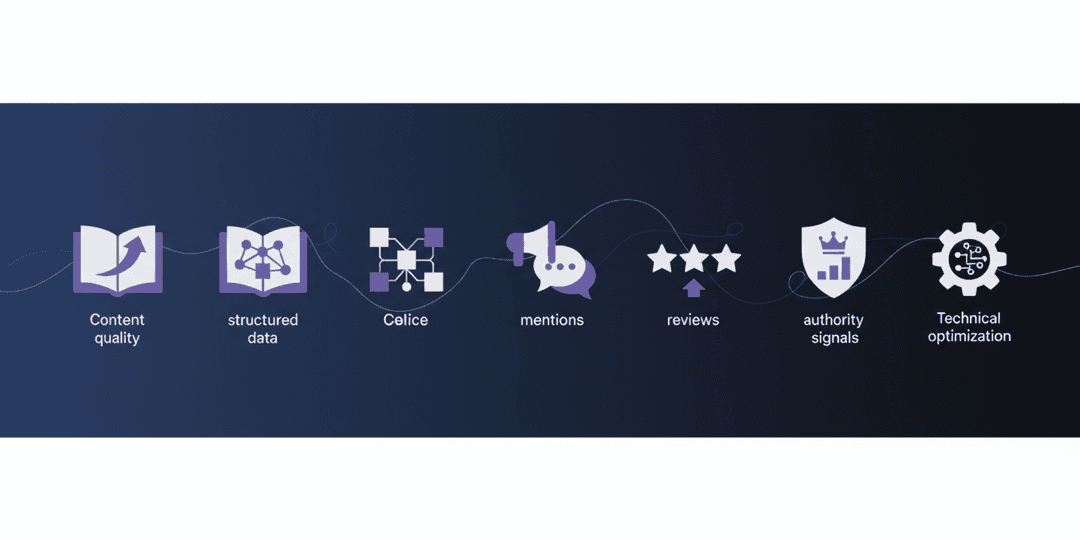
But the tactics are different. Getting ranked on Google requires keywords, backlinks, and technical SEO. Getting recommended by AI requires brand authority, third-party mentions, structured data, and content that AI models trust enough to cite. We break down exactly how this works in our complete guide to generative engine optimization.
Three shifts to make now
Stop thinking “rank” and start thinking “recommend.” Rankings still matter, but they’re no longer the whole game. Ask yourself: if a buyer asks ChatGPT about your industry, does your brand come up? If not, you have a visibility gap that rankings alone can’t fix.
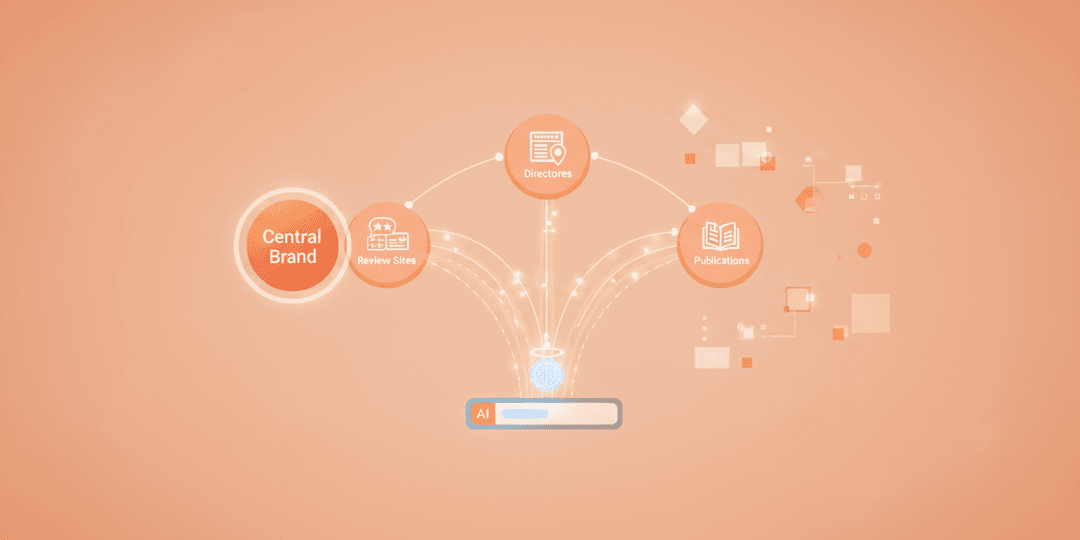
Invest in brand signals beyond your website. AI models don’t just read your site — they evaluate what the entire internet says about you. Industry mentions, reviews, directory listings, and media coverage all feed into AI recommendations. Your off-site presence matters as much as your on-site SEO.
Make your content AI-readable. Structured data, clear heading hierarchy, direct answers to specific questions, and schema markup all help AI models parse and trust your content. The more machine-readable your site is, the more likely you are to appear in AI-generated answers.
Frequently asked questions
Is Google actually losing market share to AI search?
Google’s overall market share is still dominant at roughly 90%. But the nature of those searches is changing — AI Overviews reduce click-through rates, and a growing number of users start their research on AI platforms instead of Google. The threat isn’t market share loss — it’s attention shift.
Will AI search completely replace traditional Google search?
Not anytime soon. Google will remain a primary search channel for years. But the balance is shifting, and the trend is clear: more answers delivered by AI, fewer clicks to websites, and growing user preference for conversational search over link lists.
How does this affect my current SEO strategy?
Your SEO strategy is still valuable — don’t abandon it. But it’s no longer sufficient on its own. Layer generative engine optimization on top of your existing SEO to ensure you’re visible in both traditional search results and AI-generated answers.
What should I do first to prepare for AI search?
Start by auditing your AI visibility. Ask ChatGPT, Gemini, and Perplexity the questions your customers would ask. See if your brand appears. Then focus on building the signals AI models use to make recommendations: third-party mentions, structured data, and authoritative content.
The bottom line
The search landscape isn’t dying — it’s splitting. Traditional search and AI-powered discovery are becoming two distinct channels, and businesses need visibility in both. The companies that adapt now will have a massive advantage over those that wait.
Google will still matter. But “ranking on Google” is no longer synonymous with “being found online.” The definition of search visibility just got a lot bigger.
Ready to make sure your brand shows up everywhere buyers are looking? Explore our generative engine optimization services and let’s build a strategy that covers the full picture.