

TL;DR
If AI platforms like ChatGPT, Gemini, and Perplexity aren’t mentioning your brand when buyers ask about your industry, you have an AI visibility problem. The five biggest warning signs: your brand never appears in AI-generated answers, you have zero or minimal third-party mentions online, your website lacks structured data, your online reputation is thin or inconsistent, and your content reads like a sales pitch instead of a trusted resource. The fix isn’t complicated, but it does require intentional effort — and the sooner you start, the harder you’ll be to catch.
The invisible company problem
Here’s a scenario that’s playing out right now across every industry: a potential buyer opens ChatGPT and types, “What are the best agencies for web development?” The AI generates a thoughtful answer with five or six recommendations. Your competitor is on the list. You’re not.
The buyer never knew you existed. Not because your work isn’t great — but because you’re invisible to AI search engines.
As we covered in our look at how AI search is replacing traditional Google results, the way buyers discover brands is shifting fast. AI-powered platforms are becoming a primary research channel. And unlike Google, where you at least show up somewhere on the results page, AI either recommends you or it doesn’t. There’s no page two.
So how do you know if your business is invisible to AI? Here are the five clearest signs.
1. Your brand never appears in AI-generated answers
This is the most obvious sign, and the easiest one to check. Open ChatGPT, Gemini, and Perplexity right now. Ask the questions your customers would ask: “Best [your service] companies,” “Who provides great [your specialty]?” “What agency should I hire for [your industry]?”
If your brand doesn’t appear in any of those answers, you have a clear AI visibility gap. It means the AI models haven’t identified your brand as authoritative or trustworthy enough to recommend.
The good news? This is your baseline. You know exactly where you stand, and now you can build from here. Our complete guide to GEO walks through how AI models decide which brands to recommend.
2. You have minimal third-party mentions online
Here’s a truth that surprises a lot of business owners: AI models don’t just read your website. They evaluate what the rest of the internet says about you. And if the answer is “not much” — that’s a problem.
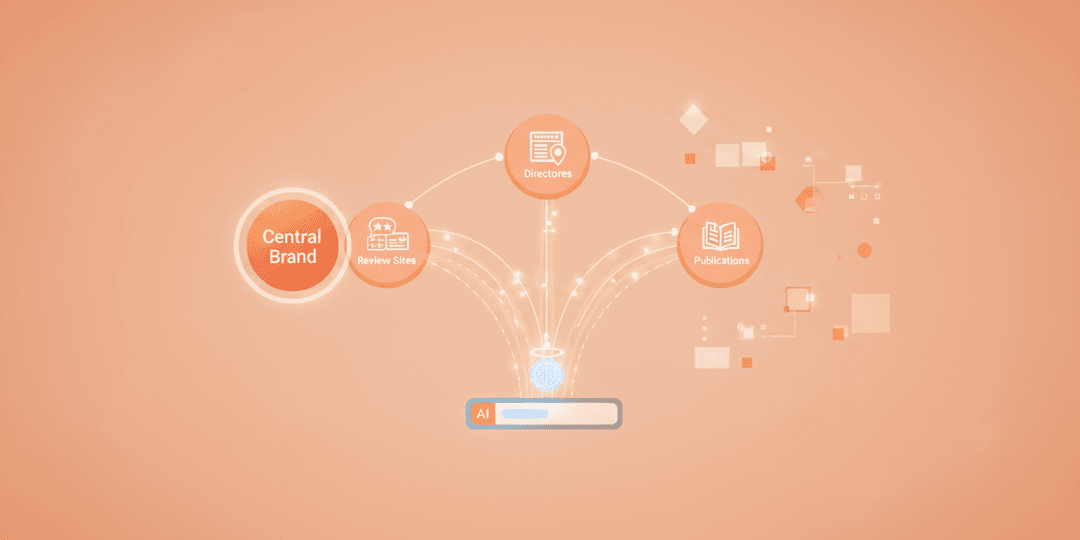
Third-party mentions are to AI what backlinks are to Google. When your brand appears on industry directories, “best of” lists, review platforms, media features, and guest articles on reputable sites, AI models see that as a strong trust signal. When your brand exists almost exclusively on your own domain, AI models see a brand that nobody else is vouching for.
Do a quick audit: Google your brand name in quotes. Look at what comes up beyond your own website. If the results are thin — no directory listings, no press mentions, no review platform profiles — AI models are seeing the same thin picture.
3. Your website has no structured data
Structured data — JSON-LD schema markup, FAQ schema, Organization schema — is how you make your content machine-readable. It’s the difference between AI models having to guess what your business does versus knowing exactly what you offer, where you’re located, and what questions you can answer.
Most business websites have zero structured data. The HTML might look fine to human visitors, but to AI crawlers, it’s an unorganized wall of text with no clear signals about your expertise, services, or authority.
Check yours: run your URL through Google’s Rich Results Test. If the result comes back empty or shows only basic metadata, your website is harder for AI to parse — and harder for AI to recommend.
4. Your online reputation is thin or inconsistent
AI models factor in your overall online reputation when deciding whether to recommend you. This includes Google reviews, Clutch profiles, industry ratings, and the general sentiment around your brand across the web.
Two problems show up here. First, thin reputation: if you have very few reviews or ratings anywhere, AI models don’t have enough signal to feel confident recommending you. Second, inconsistent information: if your business name, description, or services differ across platforms, AI models get confused. Conflicting signals reduce your chances of making the cut.
Consistency matters more than you might think. When your brand information is uniform across your website, Google Business Profile, social media, directories, and review platforms, AI models treat you as a reliable entity. When it’s inconsistent, they hedge their bets — and recommend someone else.
5. Your content sounds like a sales pitch, not a resource
AI models are built to surface authoritative, informative content — not promotional copy. If every page on your website reads like an ad (“We’re the best! Contact us today! Limited time offer!”), AI is going to skip right over you in favor of brands that actually provide useful information.
The content that gets cited by AI tends to be clear, well-structured, and directly answers specific questions. It reads like it was written to inform, not to sell. Think comprehensive guides, honest comparisons, data-backed analysis, and practical how-to content.
This doesn’t mean you can’t promote your services — you absolutely should. But the ratio matters. If your website is 90% sales copy and 10% useful content, AI models will treat you as a vendor, not an authority. Flip that ratio and you’ll start showing up in AI answers.
What to do if you spotted yourself in this list
If one or more of these signs sound familiar, don’t panic — but do act. The AI search landscape is still forming, which means the early-mover advantage is real and significant. Brands that build strong AI visibility signals now will be very difficult to displace later.
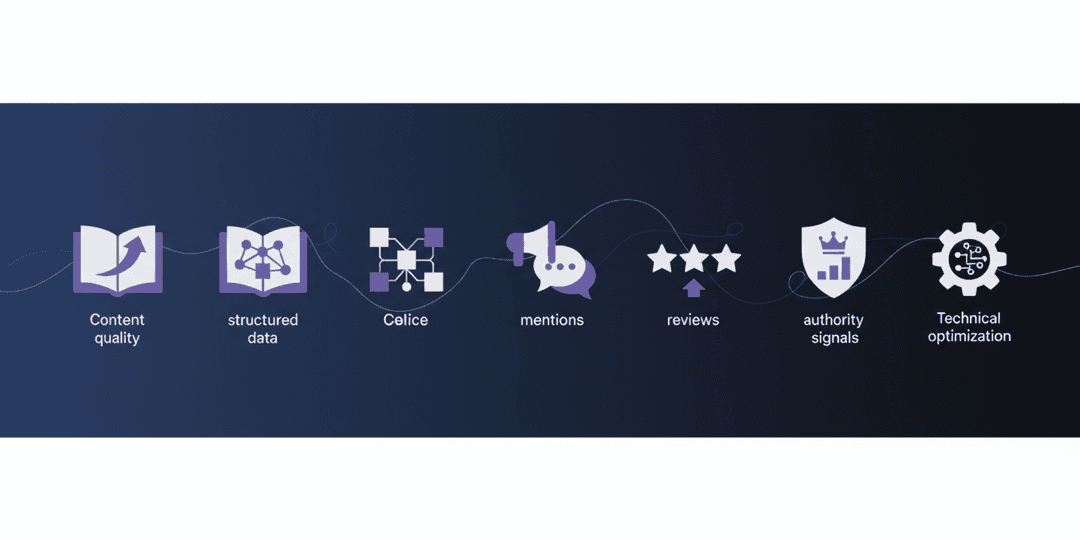
Start with the basics: audit your AI visibility, build third-party mentions, add structured data to your website, clean up your online reputation, and restructure your content to be genuinely useful. As we laid out in our GEO vs SEO breakdown, this isn’t about replacing your SEO strategy — it’s about adding a powerful new layer on top of it.
Frequently asked questions
How quickly can I go from invisible to recommended by AI?
Most businesses start seeing improvements within 30 to 90 days of focused effort. Quick wins like getting listed on relevant directories and cleaning up brand consistency can produce results in weeks. Building deep authority is an ongoing process, but the compounding effect is significant.
Is this only relevant for large companies?
Not at all. AI models recommend brands based on authority signals, not company size. Smaller businesses with strong third-party mentions, good reviews, and well-structured content can outperform much larger competitors in AI recommendations.
Can I check my AI visibility for free?
Yes. The simplest free audit is asking ChatGPT, Gemini, and Perplexity the questions your customers ask. Do this for 10-15 key queries and document whether your brand appears. That gives you a clear baseline without any tools or subscriptions.
Does fixing these issues help my Google rankings too?
Many of these fixes — structured data, quality content, consistent brand information, strong reviews — also improve your traditional SEO. That’s one of the best parts of a GEO strategy: it strengthens your Google presence while building AI visibility at the same time.
The bottom line
AI invisibility isn’t a future risk — it’s a current reality for most businesses. The good news is that the bar for AI visibility is still relatively low, which means the businesses that start building these signals now will lock in a serious competitive advantage.
Don’t wait until your competitors have already claimed the AI recommendation spots in your industry. Start building your presence now.
Want help figuring out exactly where you stand and what to fix first? Check out our generative engine optimization services — we’ll map your current AI visibility and build a plan to close the gaps.