

TL;DR
In traditional SEO, backlinks were the currency of trust. In AI search, third-party mentions have taken their place. AI models like ChatGPT, Gemini, and Perplexity decide who to recommend based on how often your brand appears across independent sources — not how many sites link to yours. Research shows that 85% of brand mentions in AI-generated answers originate from third-party pages, and brands with strong external mention profiles get up to 10x more AI visibility. Here’s why this shift matters and what to do about it.
Backlinks built the old internet. Mentions are building the new one.
For two decades, backlinks were the foundation of search authority. More links from credible sites meant higher rankings. The logic was straightforward: if other sites vouch for you by linking to your content, you must be trustworthy.
AI search engines don’t work that way.
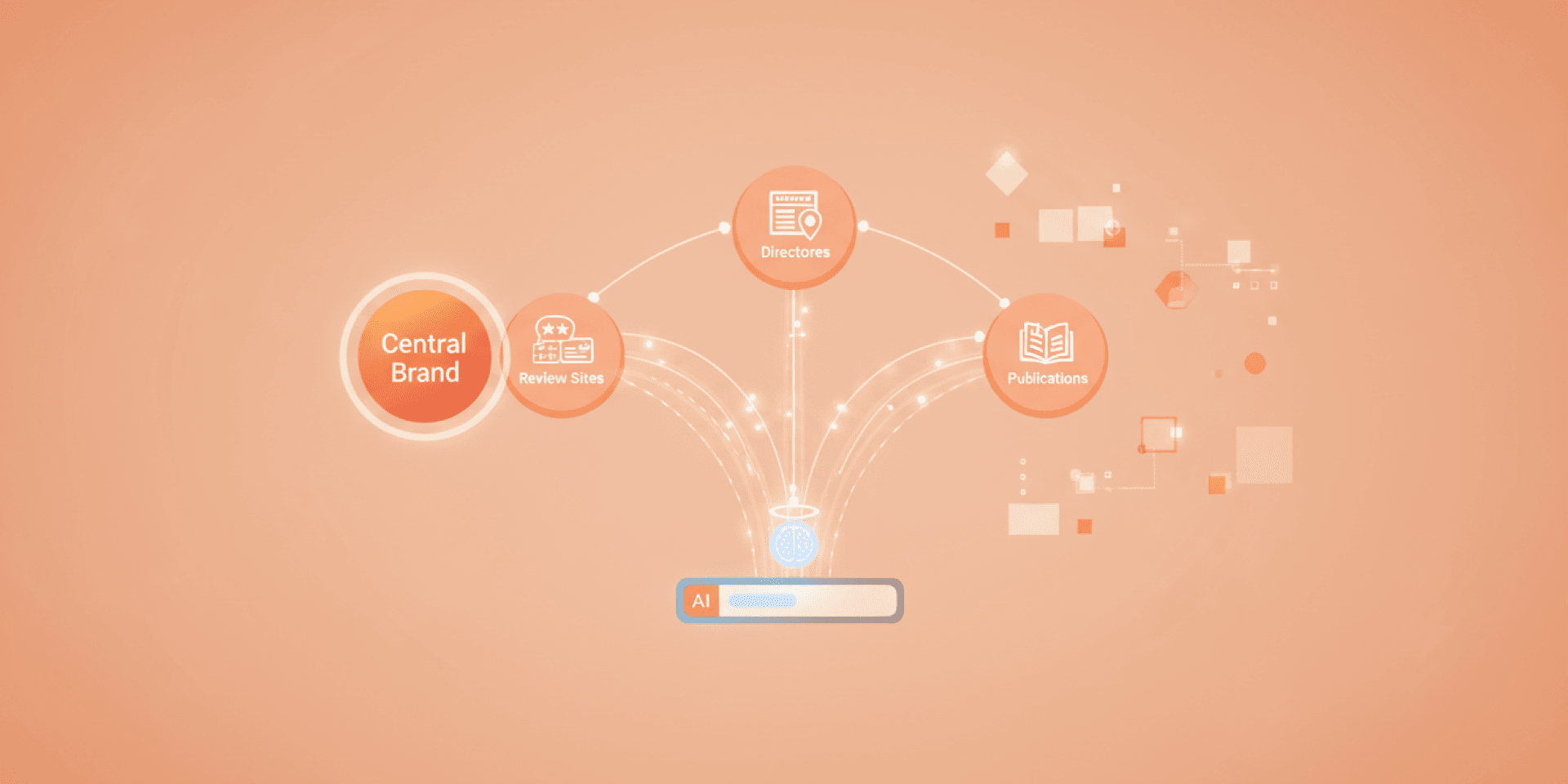
When ChatGPT or Perplexity generates a recommendation, it doesn’t crawl a link graph. It synthesizes information from across the web and decides which brands to mention based on how frequently and favorably those brands appear in diverse, independent sources. The mechanism shifted from “who links to you” to “who talks about you.”
We’ve covered how AI search is replacing traditional results, and we’ve identified the signs your business is invisible to AI. Third-party mentions are the connective thread. They’re the primary signal AI uses to validate whether your brand belongs in its answers.
The data is clear
The correlation between third-party mentions and AI visibility is dramatically stronger than the link between backlinks and traditional search rankings ever was.
Research from Search Engine Journal found that branded web mentions correlate at 0.664 with appearances in Google’s AI Overviews — compared to just 0.218 for traditional backlinks. That’s not a marginal difference. That’s a fundamentally different ranking signal.
Other findings reinforce this:
85% of brand mentions in AI-generated responses come from third-party pages — not your own website. AI models trust external validation far more than self-promotion. Your homepage saying “we’re the best” carries almost no weight. A review site, industry publication, or community forum saying “they’re the best” carries enormous weight.
Brands in the top 25% for web mentions receive 10x more AI visibility than those below that threshold. This isn’t a linear curve — it’s exponential. A modest increase in third-party mentions can produce outsized improvements in AI citation frequency.
Domains with profiles on platforms like G2, Capterra, and Trustpilot have 3x higher chances of being cited by ChatGPT compared to brands without presence on those platforms. Structured review platforms give AI models clean, parseable signals about your brand quality.
Why AI trusts mentions over links
The reason is intuitive once you think about how large language models process information. Backlinks are structural — they exist in HTML markup that AI models don’t weight the same way crawlers do. Mentions are semantic — they exist in the actual text content that AI models are trained on.
When multiple independent sources describe your brand positively, that creates a pattern in the training data. The model learns: “This brand is frequently discussed in the context of [service category] with positive sentiment.” That’s the signal that triggers a recommendation.
Links tell a crawler “this page endorses that page.” Mentions tell an AI model “this brand is recognized and trusted in this space.” The distinction matters because AI doesn’t follow links — it reads and synthesizes text.
Where mentions come from (and which ones matter most)
Not all mentions are equal. Here’s where AI models pull their brand signals from, ranked by impact:
Review platforms and directories. G2, Clutch, Capterra, Trustpilot, Google Business Profile, and industry-specific directories. These are structured, crawlable, and high-trust. If you’re a service business without profiles on at least three major review platforms, you’re leaving AI visibility on the table.
Industry publications and “best of” articles. When a publication lists you among “top agencies” or “best tools,” that’s a strong mention signal. AI models frequently synthesize these roundup articles when generating recommendations.
Community platforms. Nearly half of AI citations come from community sources like Reddit and YouTube. Brands with active presence on Reddit and Quora see roughly 4x higher AI citation rates. Authentic community engagement — answering questions, contributing to discussions — generates the kind of organic mentions AI models value most.
Guest content and media mentions. Bylined articles, podcast appearances, conference talks, and press coverage all create third-party mentions. These tend to carry strong authority signals because editorial publication implies vetting.
Social proof and case studies on external sites. When your clients or partners mention you on their own websites, that’s a third-party mention with built-in credibility. Client testimonials on their site carry more weight than testimonials on your site.
What to do about it
Building a third-party mention strategy isn’t about gaming a system. It’s about making your brand genuinely visible across the sources AI models trust. Here’s where to start:
Audit your current presence. Use our framework for measuring AI visibility to establish a baseline. Then map every platform where your brand should have a presence but doesn’t.
Claim and optimize directory profiles. Start with the big three for your industry. For service businesses, that typically means Clutch, G2, and Google Business Profile. Complete every field. Add descriptions, services, case studies, and imagery. Incomplete profiles send weak signals.
Pursue earned mentions systematically. Pitch for industry roundups. Contribute guest content. Engage authentically in Reddit communities relevant to your expertise. The goal is consistent, ongoing mention growth — not a one-time push.
Make it easy for others to mention you. Publish original research that people cite. Create tools or resources that get shared. Build partnerships that result in co-branded content. The best mention strategies give other people a reason to talk about you.
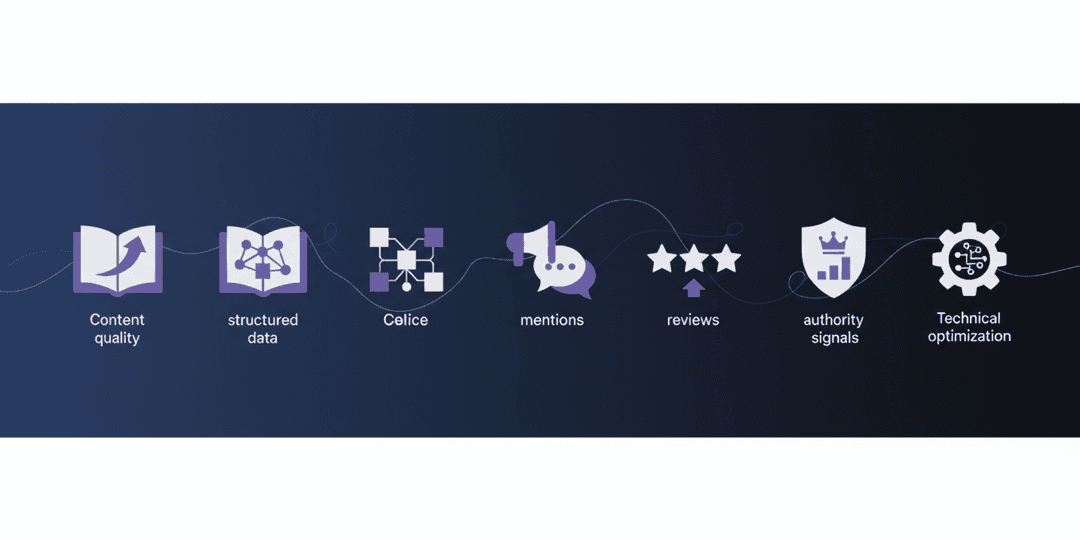
Combine with technical GEO. Third-party mentions work best when paired with structured data and clean content architecture. Mentions tell AI you’re credible. Structured data tells AI exactly what you do. Together, they give AI models everything needed to recommend you confidently.
Frequently asked questions
Do backlinks still matter for GEO?
Backlinks still benefit your traditional SEO, which indirectly supports GEO. But for direct AI visibility, third-party mentions carry significantly more weight. Think of backlinks as supporting cast — mentions are the lead. If you’re investing in one, prioritize mention-building activities that also naturally generate links.
How many third-party mentions do I need to see results?
There’s no magic number, but the data shows a threshold effect: brands in the top 25% for web mentions see dramatically higher AI visibility. Focus on consistent growth rather than a specific count. As we covered in our complete GEO guide, this is a compounding strategy — each mention builds on the last.
Can I buy third-party mentions?
Paid placements and sponsored listings exist, but AI models are increasingly sophisticated at detecting inauthentic signals. Earned mentions — genuine reviews, editorial features, organic community discussions — carry more weight and are more sustainable. Invest in creating value worth mentioning rather than purchasing exposure.
How long does it take for new mentions to affect AI visibility?
AI models are trained on web data with varying freshness. Perplexity indexes content in near real-time, while ChatGPT’s training data has longer update cycles. Expect 30-90 days for new mentions to begin influencing AI responses across platforms, with faster impact on search-augmented tools like Perplexity.
The bottom line
The shift from backlinks to mentions isn’t subtle — it’s structural. AI search fundamentally changed what “authority” means online. Your website’s link profile still matters for Google, but for the AI platforms increasingly shaping buyer decisions, third-party mentions are the signal that counts.
The businesses that recognize this early and build systematic mention strategies will dominate AI recommendations. The ones that keep chasing links exclusively will wonder why AI never mentions them.
Ready to build your AI mention strategy? Our generative engine optimization services include comprehensive third-party mention auditing, strategy development, and ongoing monitoring to grow your AI visibility systematically.