

TL;DR
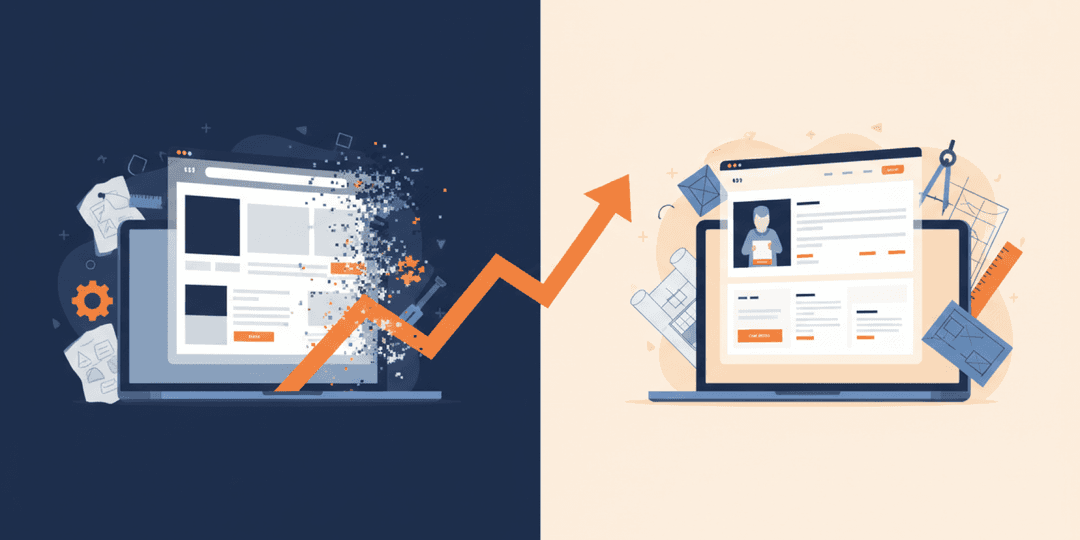
If your website is more than three years old, loads slowly, or doesn’t work well on mobile, it’s costing you customers. A modern redesign focused on speed, mobile-first design, accessibility, and security can increase conversions by 30% or more. The question isn’t whether you can afford a redesign. It’s whether you can afford not to.
Your Website Is Your First Impression. Is It a Good One?
Here’s a stat that should keep business owners up at night: 75% of consumers judge a company’s credibility based on its website design. That means three out of four potential customers are forming an opinion about your business before they ever read a word of your content or pick up the phone.
Your website isn’t just a digital brochure. It’s your hardest-working salesperson. It works 24 hours a day, seven days a week. But if it looks outdated, loads slowly, or frustrates visitors on their phones, that salesperson is actively turning people away.
So how do you know when it’s time for a redesign? Let’s break it down.
5 Signs Your Website Needs a Redesign
1. It Loads Slowly
Google has made it clear: page speed is a ranking factor. But it’s not just about SEO. Every second of load time reduces conversions. If your homepage takes more than three seconds to load, you’re bleeding revenue. Large uncompressed images, outdated plugins, and bloated code are usually the culprits.
2. It’s Not Mobile-First
More than 60% of web traffic now comes from mobile devices. If your site was designed for desktop first and then squeezed down for smaller screens, the experience shows. Tiny text, buttons too small to tap, horizontal scrolling — these are conversion killers. A modern site is designed for mobile first, then scaled up.
3. Your Bounce Rate Is Climbing
If visitors are landing on your site and leaving within seconds, your design is likely part of the problem. Confusing navigation, cluttered layouts, and unclear calls to action all contribute to high bounce rates. When people can’t find what they need quickly, they leave and find a competitor who makes it easier.
4. It Doesn’t Reflect Your Brand Anymore
Businesses evolve. You’ve added services. You’ve refined your positioning. Your team has grown. But your website still looks like version 1.0. When there’s a disconnect between who you are now and what your website communicates, you confuse potential customers and undermine trust.
5. It’s Difficult to Update
If adding a blog post or updating a team photo requires a developer, your CMS is holding you back. Modern websites are built on flexible content management systems that empower your team to make changes without writing a single line of code.
What a Modern Website Actually Needs
A redesign isn’t about making things look prettier. It’s about building a site that performs. Here’s what the best business websites in 2025 have in common.
Speed That Keeps Visitors Engaged
Fast websites convert better. Period. A well-built site leverages modern frameworks, optimized images, lazy loading, and efficient code to deliver pages in under two seconds. Google’s Core Web Vitals — metrics that measure loading performance, interactivity, and visual stability — are now table stakes for competitive search rankings.
Mobile-First Design
Mobile-first means every design decision starts with the smallest screen. Navigation is thumb-friendly. Content is scannable. Forms are short. The result is a seamless experience regardless of device. This isn’t a nice-to-have. Google uses mobile-first indexing, meaning your mobile site is what gets ranked.
Accessibility for Everyone
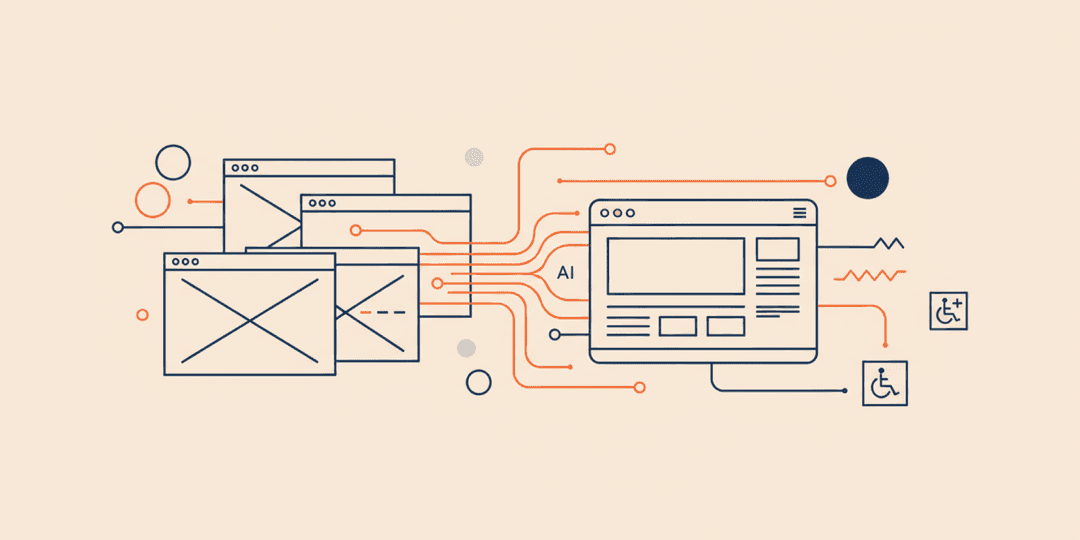
Accessible websites aren’t just the right thing to build. They’re good for business. The W3C Web Accessibility Initiative reports that accessible design improves usability for all visitors, not just those with disabilities. Proper heading structures, sufficient color contrast, keyboard navigation, and screen reader compatibility all improve the experience for everyone while protecting you from legal risk.
Security That Builds Trust
SSL certificates are the bare minimum. Modern websites need regular security updates, protection against common vulnerabilities, secure form handling, and proper data encryption. A single data breach can destroy the trust you’ve spent years building.
The Revenue Impact of a Redesign
Let’s talk numbers, because this is where redesigns justify themselves.
A faster site means more pages viewed per session. More pages viewed means more opportunities to convert. Better mobile experience means you capture the majority of your traffic that’s coming from phones. Clearer calls to action mean higher conversion rates on every page.
Consider this: if your site gets 10,000 monthly visitors and converts at 1%, that’s 100 leads per month. A redesign that improves your conversion rate to just 1.5% gives you 150 leads per month — a 50% increase in leads without spending a single additional dollar on marketing.
The impact compounds over time. Better SEO performance from improved speed and mobile experience brings more organic traffic. Lower bounce rates signal to Google that your site is valuable, which further improves rankings. It’s a virtuous cycle.
What the Redesign Process Should Look Like
A good redesign follows a structured process. It starts with discovery — understanding your business goals, your audience, and what’s currently working. Then comes strategy, where information architecture and user flows are mapped out before anyone opens a design tool.
Design happens next, with wireframes and prototypes reviewed and refined before a single line of code is written. Development follows, with rigorous testing across devices and browsers. And finally, launch — with ongoing monitoring to make sure everything performs as expected.
The worst thing you can do is skip straight to design without understanding the strategy behind it. A beautiful website that doesn’t convert is just expensive art.
How to Know You’re Ready
If you recognized your website in any of the five signs above, you already know the answer. The longer you wait, the more leads you lose to competitors with faster, more modern, more trustworthy websites.
A redesign is an investment in your business’s growth. The right partner will help you build a site that doesn’t just look great — it performs, converts, and scales with your business.
At Project Assistant, we build websites that drive measurable business results. From strategy through launch, our team handles the heavy lifting so you can focus on running your business. If your website isn’t pulling its weight, let’s talk about what a redesign could do for you.