
You set your alarm for 6:30. By 6:45, you’re staring at your phone. Slack notifications. Three emails flagged urgent. A text from your project manager about a client who’s unhappy. You open your CRM to check the pipeline. Then your project management tool. Then your invoicing platform. Then your calendar. By the time you’ve assembled a rough picture of what actually needs your attention today, it’s 8:00 AM and you haven’t done a single productive thing.
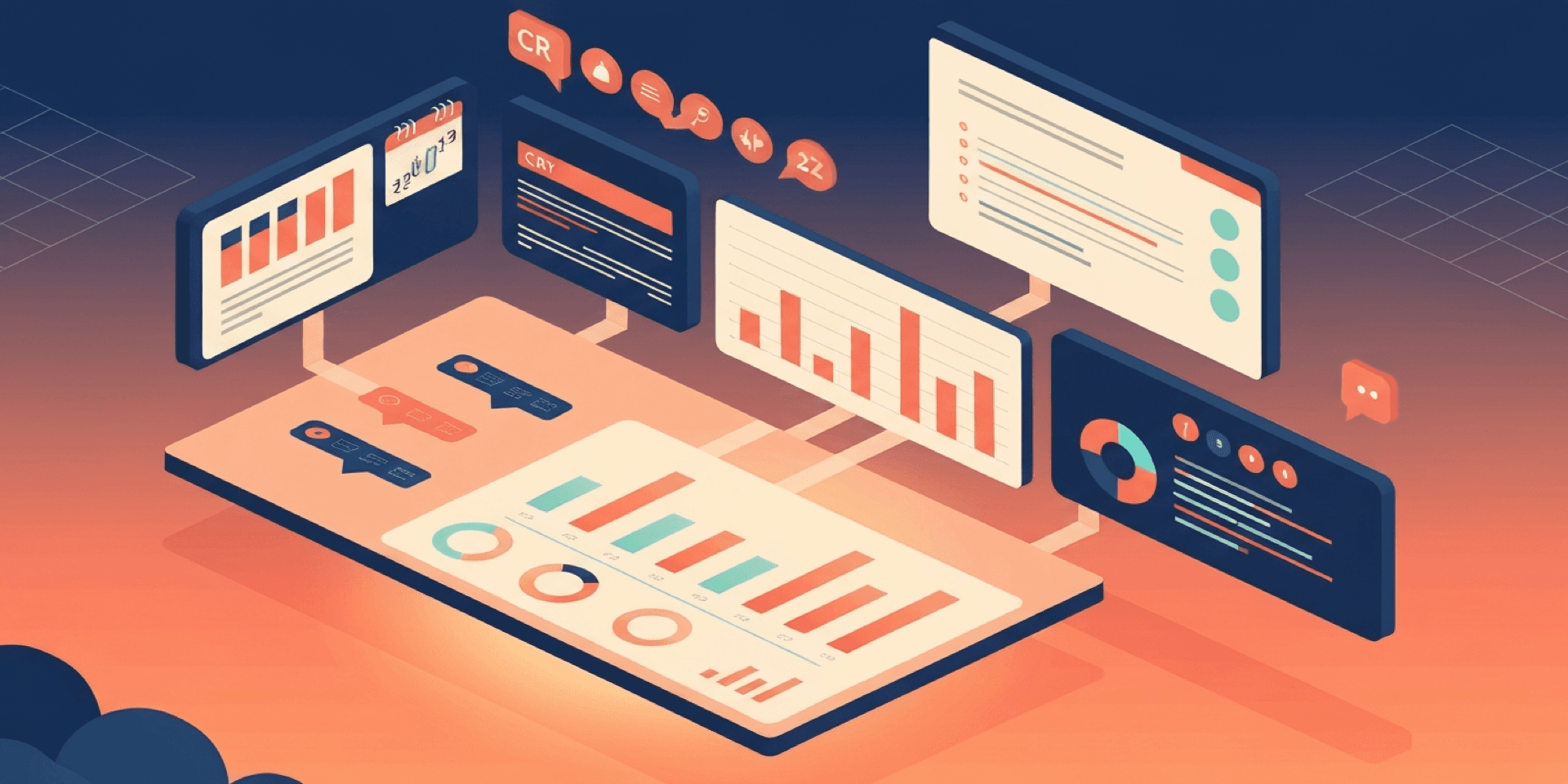
Now imagine a different morning. You wake up. You open one document. It tells you exactly what changed overnight, what needs attention, what’s at risk, and where the opportunities are. Every data point pulled from every tool your business runs on. Synthesized. Prioritized. Ready to act on.
That’s the morning brief. And it’s not science fiction.
TL;DR
Most business owners start every day buried in context-switching across a half-dozen tools just to figure out what needs attention. AI agents can now aggregate data from your CRM, project management, invoicing, meeting transcripts, and communications overnight and deliver a single, actionable intelligence briefing before you start your day. This is autonomous business intelligence, and it follows a clear evolution: first AI highlights what matters in your existing tools, then it generates the full briefing on its own, and eventually you stop manually checking individual dashboards entirely. The morning brief is just the beginning of a future where AI doesn’t just report problems but starts resolving them before you’re involved.
The first hour problem
If you run a service business, your morning probably looks something like this: check email for anything on fire, scan Slack or Teams for overnight messages, open your CRM to see if any deals moved, check your project management tool for deadline updates, glance at your financials, and skim yesterday’s meeting notes for action items you might have missed.
That’s five to ten separate tools. Each one holds a fragment of the picture. None of them talk to each other in any meaningful way. And the most important signals, the ones that actually require your attention, are buried under routine noise.
The result is predictable. You spend the first hour of every workday doing low-value reconnaissance. You’re not making decisions. You’re not moving projects forward. You’re just trying to orient yourself. And by the time you’ve built enough context to act, the morning is half gone.
This isn’t a productivity hack problem. No Pomodoro timer fixes it. No “inbox zero” system solves it. The problem is structural: your business intelligence is scattered across a dozen platforms and nobody is synthesizing it for you.
What autonomous business intelligence actually looks like
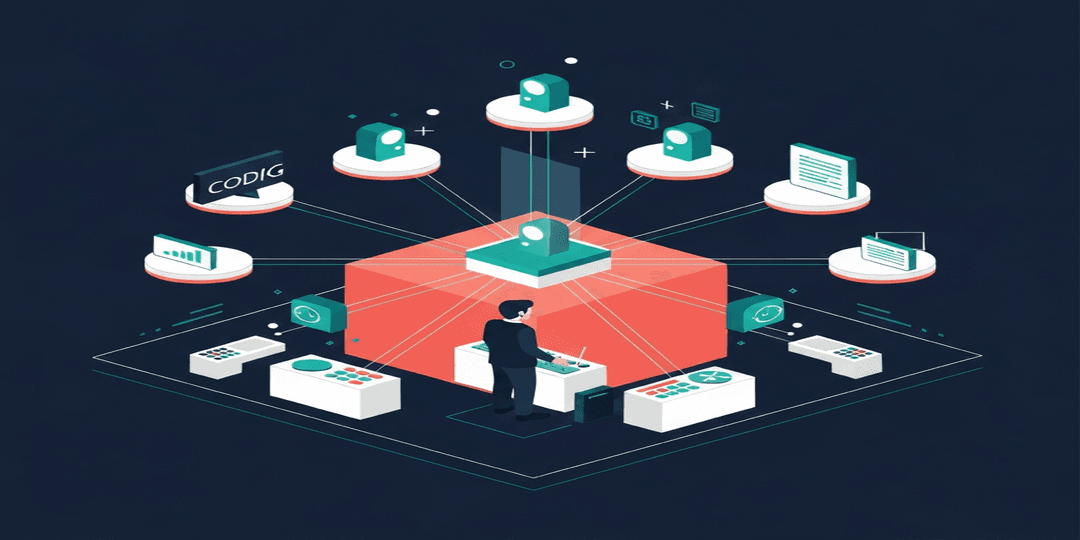
The concept is straightforward even if the execution is sophisticated. An AI agent runs overnight. It connects to every system your business depends on: your CRM, project management platform, invoicing tools, calendar, email, meeting transcription service, and communication channels. It pulls the latest data from each one. Then it does something no dashboard can do on its own: it thinks across all of them at once.
It identifies patterns. A deal that was moving fast suddenly stalled. A project that looked on track just had two blockers logged in the same day. An invoice that’s 15 days overdue is attached to a client who also has a proposal pending. A meeting yesterday produced three action items that nobody has started.
The agent doesn’t just aggregate. It synthesizes. It understands that the stalled deal, the overdue invoice, and the client sentiment from yesterday’s meeting notes are all connected, and it surfaces that connection for you.
You wake up to a single document. Everything that matters. Nothing that doesn’t. This is what AI-powered systems are moving toward: not just faster tools, but genuinely autonomous intelligence.
Living software and the compute advantage
Dan Disler of Agentic Engineer has a term for this class of systems: “living software.” The idea is that software can have a mission, autonomy, and access to tools, and can execute independently without a human sitting at the keyboard. It’s software that generates outcomes while you sleep.
The morning brief is a textbook example. You define the mission: “Tell me what changed, what’s at risk, and what I should focus on today.” You give the agent autonomy to connect to your systems and analyze the data. You give it tools to pull from APIs, parse meeting transcripts, and calculate financial projections. Then you go to bed.
By morning, you have intelligence that would have taken you an hour to assemble manually, and it’s better than what you would have produced because the agent doesn’t get distracted, doesn’t forget to check one of the ten platforms, and doesn’t suffer from Monday morning brain fog.
Think of it as a compute advantage equation: the value of AI multiplied by its autonomy, divided by the time, effort, and cost required from you. The morning brief is pure compute advantage. Zero human effort producing high-value output. The agent does the work. You receive the results. That’s the ratio every business owner should be optimizing for.
The three-phase evolution
This doesn’t happen overnight. Like most meaningful technology shifts, autonomous business intelligence follows a clear progression. Understanding where you are on this path helps you plan where to invest next.
Phase 1: Augment
AI enhances your existing workflow without replacing it. You still check your CRM every morning, but now AI highlights the three deals that need immediate attention instead of making you scan the entire pipeline. Your project management tool still requires a daily check-in, but AI flags the two projects that are trending behind schedule. You’re still doing the work of looking, but AI is making you faster at finding what matters.
This is where most businesses can start today with relatively low complexity.
Phase 2: Automate
AI generates the full briefing autonomously. You no longer open individual tools at all. The agent runs overnight, connects to everything, and produces a single intelligence report waiting in your inbox when you wake up. The information is the same as what you’d have gathered manually, but the process of gathering it is entirely removed from your plate.
This is the morning brief in its purest form. It requires integration work and thoughtful configuration, but the economics of building these systems have shifted dramatically in favor of businesses willing to invest.
Phase 3: Deprecate
You stop manually checking individual tools entirely. Not because you’re ignoring them, but because the AI has proven reliable enough that manual checks add no value. The agent has become your primary interface for understanding your business. The individual tools still exist and still hold the data, but you interact with them through the agent’s lens rather than logging into each one directly.
This is the end state. And it’s the same pattern playing out across every area where AI is maturing: augment what exists, automate the routine, then deprecate the old workflow entirely.
What a morning brief actually contains
Theory is nice. Specifics are better. Here’s what an autonomous morning brief delivers, broken down by the intelligence that actually matters to a business owner.
Deal pipeline intelligence
New leads that came in overnight. Deals that moved stages. Deals that have been sitting idle for too long. Follow-ups that are overdue. The brief doesn’t just list pipeline changes; it tells you which ones need your attention and why. “Acme Corp hasn’t responded in 9 days and their contract renewal is in 3 weeks” is infinitely more useful than a raw CRM notification.
Project health
Which projects are on track. Which ones are falling behind. Where blockers have been logged. What milestones were completed yesterday. The agent cross-references timelines with team capacity and client expectations to give you a genuine health assessment, not just a status update. If scope creep is emerging, it flags it before the project manager even notices.
Financial snapshot
Invoices coming due this week. Payments received overnight. Cash flow projections for the next 30 days. Anomalies like unexpected expenses or clients with multiple overdue invoices. This isn’t a replacement for your accountant. It’s the executive-level view that lets you walk into your day knowing exactly where the money stands.
Meeting intelligence
Key decisions from yesterday’s meetings. Action items assigned to you and your team. Follow-ups that were promised but not yet scheduled. If your business records and transcribes meetings, the agent can parse those transcripts and pull out what matters so you never lose track of a commitment.
Risk alerts
This is where the synthesis really shines. A scope creep alert because the same project had three out-of-scope requests in one week. A client sentiment warning because their communication tone shifted from positive to neutral across the last few emails. A deadline pressure flag because a milestone is due Friday and two of the three prerequisite tasks aren’t complete. Individual tools can’t see these patterns. An agent operating across all your data can.
This isn’t just for tech companies
If you’re reading this and thinking “sounds great for a Silicon Valley startup, but my business is different,” stop right there. The morning brief concept applies to any business that runs on information spread across multiple systems. That’s every law firm, every marketing agency, every construction company, every consulting practice, every healthcare provider.
If you have a CRM, a project tracker, an invoicing tool, and a calendar, you have the raw ingredients. The specifics of what the brief contains will differ by industry. A law firm might care about case deadlines and billing thresholds. A construction company might care about permit timelines and subcontractor availability. But the pattern is universal: scattered data, synthesized overnight, delivered as actionable intelligence.
The competitive advantage goes to whoever acts on information fastest. And acting fast starts with having the information when you need it, not spending an hour assembling it.
Beyond the brief: where this is heading
The morning brief is the beginning, not the destination. Once you have an agent that understands your business data well enough to report on it, the natural next step is giving it the ability to act on what it finds.
A stalled deal? The agent drafts a follow-up email for your review. A project falling behind? It suggests a revised timeline and flags the dependencies. An overdue invoice? It sends a polite reminder before you’ve finished your coffee. This is the trajectory: from reporting to recommending to resolving.
That’s the bigger promise of custom-built business applications. Not just tools that store data, but systems that understand it, reason about it, and increasingly handle the routine decisions that used to eat your morning.
The question isn’t whether this will happen. It’s whether you’ll be early or late. And if there’s one lesson from every major technology shift, it’s that early adopters don’t just save time. They build compounding advantages that late adopters can never fully close.
Getting from here to there
You don’t need to build a fully autonomous morning brief tomorrow. Start by mapping the tools you check every morning and the questions you’re trying to answer. That map is your brief’s blueprint.
Then look at what’s already possible. Many CRM and project management platforms have API integrations that AI agents can connect to today. Meeting transcription services already produce structured output. Financial tools already expose the data you need. The pieces exist. What’s missing is the orchestration layer that pulls them together.
Building that layer is a real engineering challenge. It’s not a ChatGPT prompt. It’s a custom application that connects to your specific tools, understands your specific business logic, and produces intelligence tailored to how you actually make decisions. Getting the prototype working is one thing. Getting it reliable enough to trust every morning is another.
But that’s exactly the kind of system that separates businesses running on autopilot from businesses running on intelligence.
Frequently asked questions
How is this different from a regular dashboard?
Dashboards display data. They don’t synthesize it. A dashboard shows you that a deal hasn’t moved in 10 days. A morning brief tells you that deal hasn’t moved, the client also has an overdue invoice, and their tone in yesterday’s meeting was unusually short. Dashboards require you to look and interpret. The brief does the interpretation for you.
What tools does the AI agent need to connect to?
That depends on your business, but the most common integrations include your CRM (like HubSpot or Pipedrive), project management platform (like Asana, Monday, or ClickUp), invoicing or accounting tool (like QuickBooks or Xero), calendar, email, and meeting transcription service. The more systems it can access, the more complete the intelligence.
Is this something I can build with off-the-shelf tools?
You can get a basic version working with automation platforms like Zapier or Make connected to an AI model. But a production-quality morning brief that reliably synthesizes data across multiple systems, handles edge cases, and improves over time requires custom development. The prototype-to-production gap is real, and it’s where most DIY attempts stall.
How long before this kind of system is mainstream?
The foundational technology exists today. AI agents that can connect to APIs, process data, and generate structured reports are production-ready. The bottleneck isn’t the AI. It’s the integration work: connecting your specific tools, defining your business logic, and building something reliable enough to trust daily. Businesses building these systems now will have a significant head start.
Your morning is waiting
Every morning you spend manually piecing together what’s happening in your business is a morning you’re not spending on the work that actually grows it. The technology to change that exists. The question is whether you’re ready to invest in building the system that makes it real.
If you’re thinking about what autonomous business intelligence could look like for your company, we build exactly these kinds of systems. Let’s talk about what your morning could look like.