
Most agencies sell AI. We run on it.
That’s not a tagline. It’s an operational reality. The AI agents we’ve built don’t just power client projects — they manage our proposals, run our quality assurance, generate our daily intelligence briefings, and coordinate our development operations. We are, in every meaningful sense, an agentic agency.
And that distinction — between an agency that uses AI tools and one that operates through AI agents — is the difference your project feels on every deliverable.
TL;DR
An agentic agency doesn’t just offer AI as a service — it runs its internal operations through autonomous AI agents. Project Assistant has built specialized agents that handle quality assurance, proposal generation, daily intelligence briefings, marketing, and development orchestration. These aren’t chatbots or copilots. They’re autonomous systems with defined missions that execute independently, around the clock. For clients, this means faster turnaround, higher quality, better communication, and lower costs — not because we cut corners, but because we’ve fundamentally changed how an agency operates.
What “agentic” actually means
The term gets thrown around loosely, so let’s be precise.
An AI agent isn’t a chatbot you ask questions. It’s a system with a mission, autonomy, and tools — one that executes independently toward a defined outcome. Dan Disler, one of the more rigorous thinkers in this space, describes it as “living software”: systems that don’t wait for instructions. They receive a goal, plan their approach, use whatever tools they need, and deliver results.
The hierarchy he outlines is simple and profound: Agent > Code > Manual Input. If an agent can do it autonomously, don’t write static code for it. If code can handle it, don’t make a human do it manually. Every task should be pushed as high up that chain as possible.
This isn’t just a development philosophy. It’s an operational one. And we’ve applied it to how we run the entire agency.
The compute advantage
There’s a formula that captures why this matters. The Compute Advantage equals your compute scaling multiplied by the autonomy of your systems, divided by the time, effort, and cost those systems consume.
In plain language: the more work your AI agents can do independently, and the less human effort required to keep them running, the greater your operational advantage. When you design systems that generate outcomes while you sleep, you’re not just being efficient. You’re operating on a fundamentally different plane than agencies that rely on manual processes.
That advantage flows directly to every project we take on.
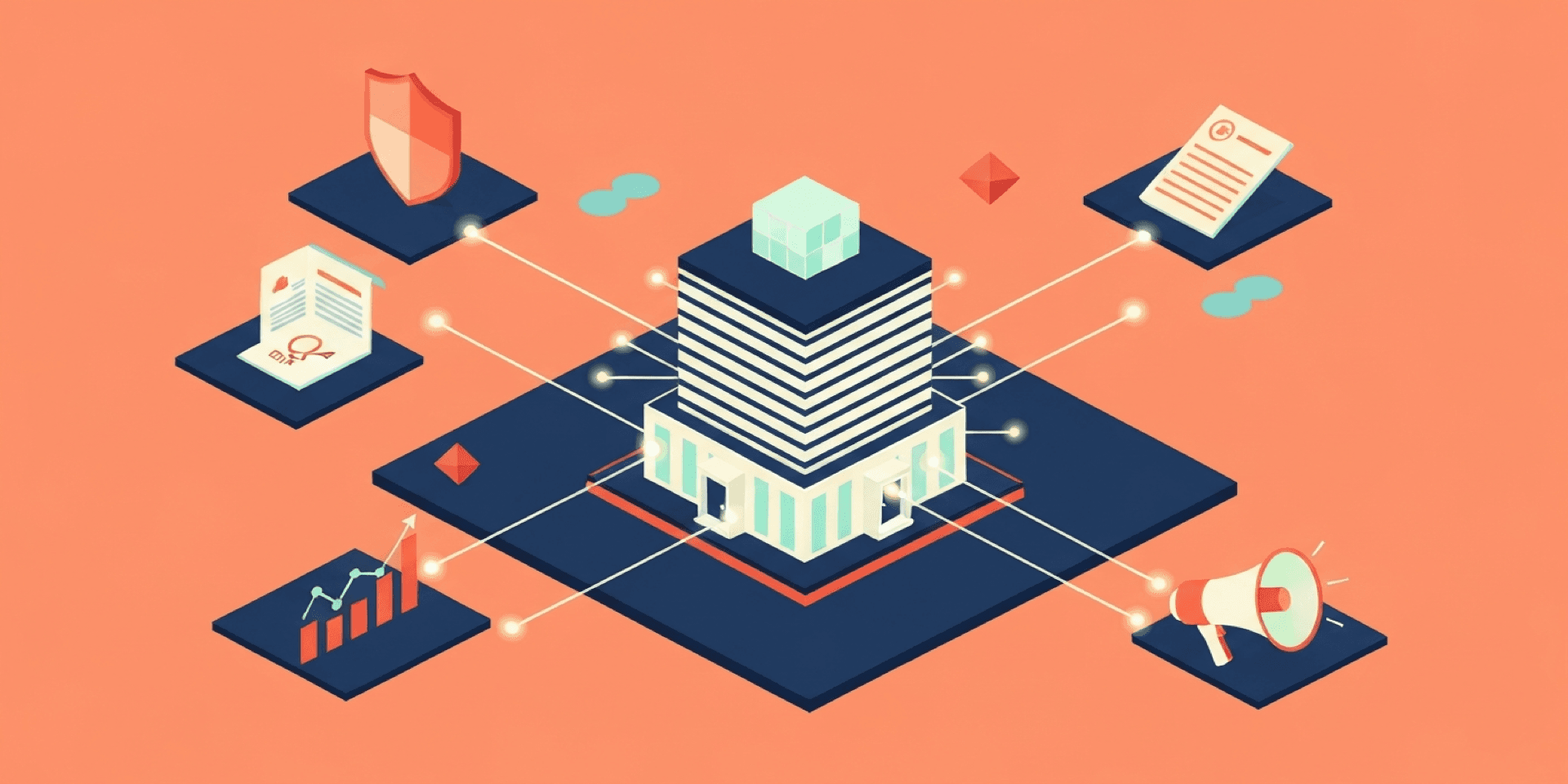
The agents running our operations
We’re not going to reveal our proprietary architecture. But we can give you a clear picture of what our internal AI agents actually do — and why each one makes your project better.
Autonomous quality assurance
When a project ticket is created, our QA agent receives it and autonomously generates end-to-end tests. It doesn’t wait for a human to write test cases. It reads the requirements, understands the expected behavior, and builds comprehensive test coverage — then runs those tests against the actual code.
This is quality at machine speed. Issues that would normally surface weeks later during manual QA are caught within minutes. Every feature gets tested more thoroughly than a human QA team could manage, because the agent doesn’t get tired, doesn’t skip edge cases, and doesn’t rush when deadlines are tight.
Intelligent proposal generation
After a client discovery call, our proposal agent takes the meeting transcript and generates a comprehensive scope document — in minutes, not days. It identifies requirements the client mentioned, flags ambiguities that need clarification, estimates complexity based on similar past projects, and produces a structured document that our team reviews and refines.
The result? You get a thorough, detailed proposal faster. And because the agent catches requirements that might otherwise be missed in a human’s notes, the scope is more accurate from the start. Fewer surprises later. Fewer change orders. A better project.
Daily intelligence briefings
Every morning, an agent aggregates data from our CRM, project management tools, and financial systems into an executive summary. Project status, upcoming deadlines, resource allocation, client communication gaps, budget burn rates — all synthesized into a single briefing that tells our leadership team exactly where attention is needed.
For your project, this means nothing falls through the cracks. If a deliverable is trending behind schedule, we know before it becomes a problem. If communication has gone quiet on a thread that needs a response, it surfaces automatically. The kind of proactive project management you’d hope for from any agency, but powered by a system that never forgets to check.
Marketing and content operations
Our content pipeline — from topic research to SEO analysis to distribution — is managed by an AI agent. It identifies content opportunities, analyzes search intent, generates drafts for human review, and handles the operational work of getting content published and distributed.
This isn’t directly about your project, but it’s indirectly about everything. An agency that operates efficiently internally has more capacity, more focus, and more resources available for client work. Our marketing doesn’t steal developer hours because it doesn’t need them.
Voice-to-code development orchestration
This is the one that changes the game most visibly. Our development orchestration system converts high-level instructions into coordinated development operations. A project lead can describe what needs to be built, and the system breaks it down into tasks, delegates to specialized development agents, coordinates the work, runs quality gates, and delivers tested, reviewed code.
It’s the operational backbone behind what we’ve described as AI-powered development. Not a single AI tool bolted onto an existing workflow, but a fundamentally redesigned process where AI agents handle the coordination, verification, and quality enforcement that used to consume the majority of development time.
What this means for your project
We could describe this as “we’re more productive.” But that undersells it. The impact is structural.
Faster turnaround
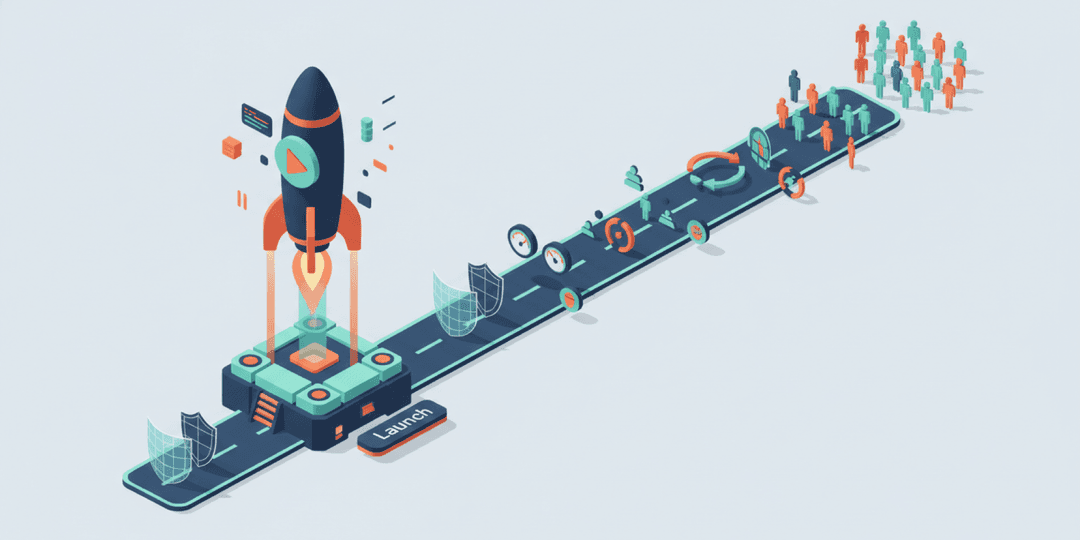
Agents work around the clock. When our team finishes for the day, quality checks are still running, tests are still executing, and intelligence is still being gathered. A feature that’s submitted at 5 PM has been through automated QA by the time the team starts the next morning. That’s not a marginal improvement. It compresses timelines in ways that manual processes can’t match.
Higher quality
Human QA is good. Automated, agent-driven QA running continuously on every commit is better. Not because humans lack skill, but because agents don’t suffer from fatigue, deadline pressure, or the temptation to skip “just this one test.” Every feature gets the same exhaustive treatment, every time. The result is fewer bugs in production and fewer post-launch surprises.
Better communication
When an agent generates daily intelligence briefings that surface every project status change, every pending decision, and every communication gap, nothing gets lost. You don’t have to chase your agency for updates. The system ensures that if something needs your attention, it surfaces. If something is on track, that’s confirmed. Proactive transparency, powered by automation.
Lower costs
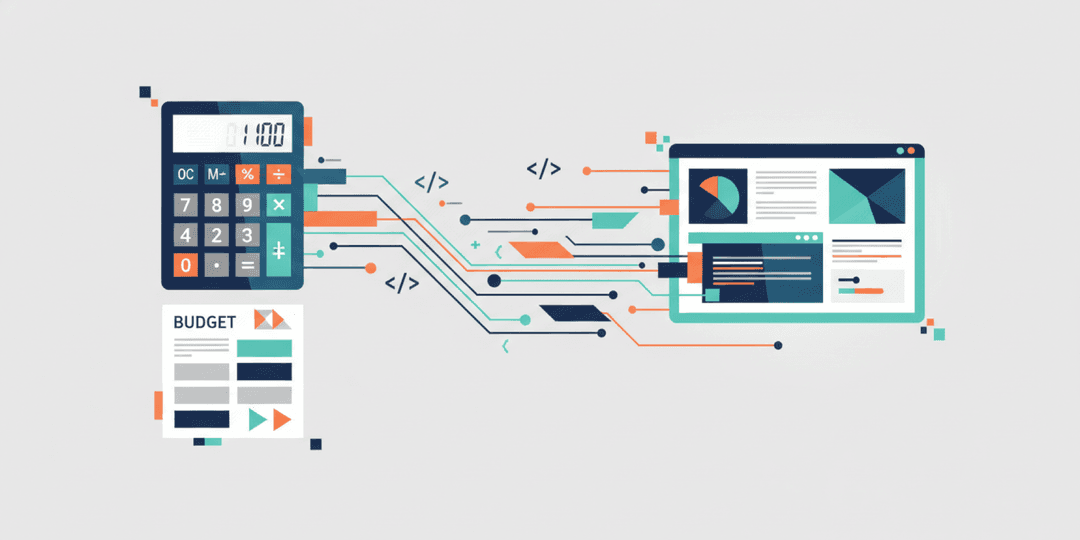
The iron triangle told us we couldn’t have fast, good, and cheap at the same time. That constraint assumed every hour of quality work required an hour of human effort. When agents handle the verification, testing, documentation, and coordination — the work that used to consume 60-70% of a project’s hours — the total cost of delivering a high-quality result drops significantly.
This doesn’t mean we charge less per hour. It means you need fewer hours to get a better result. The economics of building software are genuinely different when the agency’s operations are agentic.
The difference between using AI and being agentic
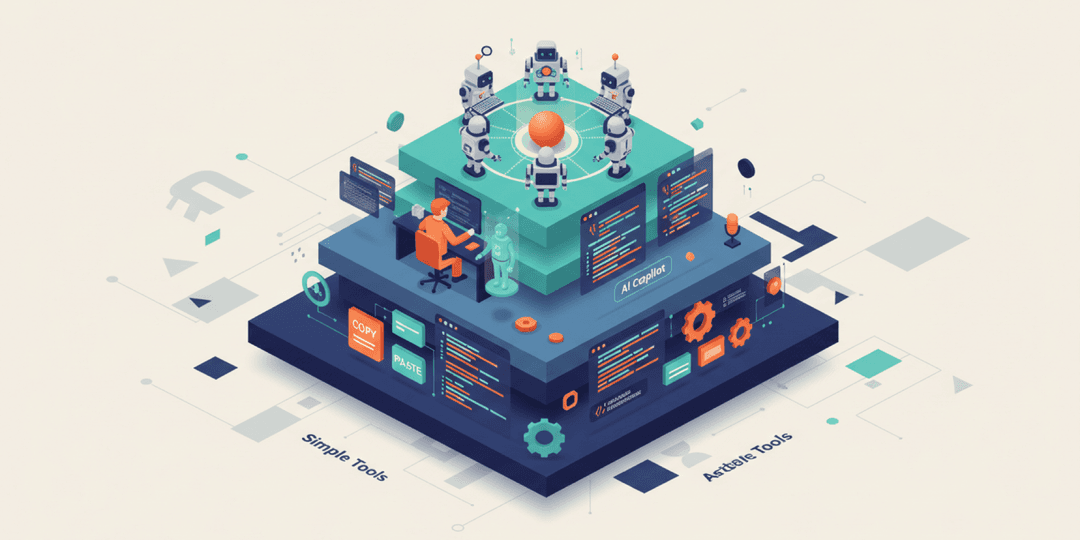
Every agency claims to use AI now. Most of them mean they’ve given their developers access to a chatbot. Some have integrated copilot tools into their IDE. A few have built custom workflows around specific tasks.
Being an agentic agency is categorically different. It means AI agents are embedded in the operational fabric of how the company runs. Not as tools that individual people use, but as autonomous systems that execute defined missions across every function of the business.
The practical difference for clients is significant:
- Tool-using agency: Developers are faster, but the process is the same. Quality still depends entirely on human discipline. Communication still depends on someone remembering to send the update. Scope accuracy still depends on whoever took the notes.
- Agentic agency: Quality is enforced by systems, not willpower. Communication gaps are detected automatically. Scope is validated by agents that cross-reference requirements against every decision made. The process itself is fundamentally more reliable because it doesn’t depend on any single person having a good day.
This isn’t about replacing humans. Every one of our agents has human oversight at critical decision points. The scope document gets reviewed by a human strategist. The QA results get verified by a human developer. The intelligence briefing gets read by a human leader who decides what to act on.
The agents handle the work. The humans handle the judgment. That combination is more powerful than either alone.
Why most agencies aren’t doing this
Building internal AI agents is hard. It requires deep expertise in both AI systems and the specific operational domain you’re automating. You need developers who understand prompt engineering, agent architecture, tool integration, and the messy realities of production systems.
More importantly, it requires an agency to invest significant time and resources into infrastructure that clients never see directly. Most agencies optimize for billable hours. Building internal operational agents is the opposite of that — it’s unbillable investment in capabilities that pay off over hundreds of projects.
We made that investment because we believe the agentic model isn’t just better for us. It’s better for every client we work with. And the results have proven that out.
Frequently asked questions
Does “agentic” mean AI is making decisions about my project without human oversight?
No. Our AI agents handle execution and verification — running tests, generating documents, surfacing data. Every strategic decision, architectural choice, and client-facing deliverable involves human judgment. The agents make us faster and more thorough. They don’t make decisions for you or bypass human review.
How is this different from just using ChatGPT or Copilot?
ChatGPT and Copilot are tools that individual people use. Our agents are autonomous systems that operate independently across the organization. A developer using Copilot types faster. An agentic QA system catches bugs at 2 AM without anyone being awake. The difference is between a better tool and a better operating model.
Will my project cost less because you use AI agents internally?
The total project cost is typically lower because we need fewer hours to achieve the same (or higher) quality. Our agents handle work that would otherwise require manual effort — quality checks, documentation, coordination, testing. That operational efficiency translates to more value for your budget, though the exact impact depends on the project scope and complexity.
Is this approach proven, or is it experimental?
This is how we operate today, on every project. Our agents have been running in production for months, handling real client work. The QA agent has caught issues that would have otherwise reached production. The intelligence briefing runs every morning. The development orchestration system coordinates active projects right now. This isn’t a roadmap item. It’s our current operating model.
The bottom line
The agentic model isn’t a feature we offer. It’s how we’re built.
Every project you bring to us benefits from an operational backbone that most agencies don’t have: AI agents that enforce quality, surface risks, compress timelines, and ensure nothing falls through the cracks. Not because we bolted a chatbot onto an old process, but because we redesigned the process from the ground up around autonomous, mission-driven systems.
The question for any business evaluating agencies in 2026 isn’t just “do they use AI?” It’s “do they run on AI?” The answer changes everything about what you can expect from the engagement.
Want to see what an agentic agency can do for your project? Explore our development services, or start a conversation about your next build.