

TL;DR
The GEO agency market is exploding, and most of what’s out there is repackaged SEO with an AI label. Choosing the right GEO partner means evaluating their methodology, measurement capabilities, and technical depth — not just their pitch deck. This guide covers the five essential criteria for evaluating a GEO agency, the red flags that indicate an agency is faking expertise, and the questions you should ask before signing anything. If you’re investing in AI visibility, the agency you choose will determine whether that investment pays off.
The GEO agency gold rush
When a new marketing discipline emerges, two things happen simultaneously: a handful of practitioners develop genuine expertise, and a much larger group rebrands existing services to capture the hype. GEO is no exception.
As AI search reshapes how buyers discover businesses — something we’ve covered extensively across this series, from our foundational GEO guide to the six strategies for AI recommendations — demand for GEO services is surging. Lists of “top GEO agencies” are everywhere. The challenge isn’t finding an agency that claims to do GEO. It’s finding one that actually can.
What to look for: five essential criteria
1. Dedicated GEO methodology (not repackaged SEO)
This is the single most important differentiator. A genuine GEO agency has developed specific processes for AI visibility that go beyond traditional SEO. The difference between GEO expertise and “AI SEO” branding is substantial.
Ask for their methodology. A credible agency should explain:
How they approach third-party mention building. As we covered in our piece on why mentions are the new backlinks, this is foundational to GEO. An agency should have a systematic process for earning brand mentions across the sources AI models trust — not just a vague promise to “improve your online presence.”
How they handle structured data and technical implementation. GEO has a significant technical foundation — JSON-LD schema markup, content architecture, llms.txt protocol. An agency that can’t explain what these are or how they implement them is operating at a surface level.
How they differentiate GEO from SEO in practice. The two disciplines overlap but aren’t identical. We broke this down in our GEO vs SEO comparison. An agency should articulate where their GEO work extends beyond traditional SEO — and where the two complement each other.
2. AI visibility measurement and reporting
If an agency can’t measure AI visibility, they can’t optimize for it. This is where many agencies fall short — they apply SEO tactics and hope they work for AI without actually tracking the results.
A credible GEO agency should measure and report on:
AI citation frequency. How often your brand appears in AI-generated responses across ChatGPT, Gemini, and Perplexity. This is the core KPI — the GEO equivalent of search rankings. We detailed how to set this up in our AI visibility measurement guide.
Source inclusion rate. Whether AI platforms cite your content as a source when making recommendations. This goes beyond brand mentions to measure content authority.
Brand sentiment in AI responses. Not just whether AI mentions you, but how it describes you. Positive, neutral, or qualified sentiment makes a real difference in conversion.
Competitive benchmarking. How your AI visibility compares to specific competitors on the same queries. Without competitive context, you can’t evaluate performance meaningfully.
3. Technical depth (not just content marketing)
GEO requires genuine technical capability. An agency that only does content marketing is covering one dimension of a multi-dimensional problem.
Technical GEO capabilities that matter include:
Schema markup implementation. Organization, FAQ, Service, and LocalBusiness schema markup — properly structured in JSON-LD format that both search engines and AI models can parse.
Content architecture auditing. Evaluating and improving heading hierarchy, semantic HTML, and page structure for AI extraction.
llms.txt protocol. Implementing the emerging standard for direct communication with AI crawlers.
Entity optimization. Ensuring your brand, services, and key personnel are properly represented as entities across the web — making it easier for AI to connect mentions to your brand.
4. Proven case studies with AI-specific metrics
Ask for case studies that show results in AI metrics — not just SEO metrics. An agency might have great SEO case studies, but if they can’t show evidence of improving AI citation frequency or brand sentiment in AI responses, their GEO track record is unproven.
Look for specific evidence:
Before-and-after AI citation data. “Client went from 10% citation frequency to 45% across target queries in 6 months” is a meaningful GEO result. “Client improved their search rankings” is an SEO result being passed off as GEO.
Platform-specific results. Results across ChatGPT, Gemini, and Perplexity specifically — not just Google. AI visibility is a multi-platform challenge.
Third-party mention growth documentation. Evidence that the agency systematically grew external mentions and can link that growth to improved AI visibility.
5. Cross-functional strategy (not siloed tactics)
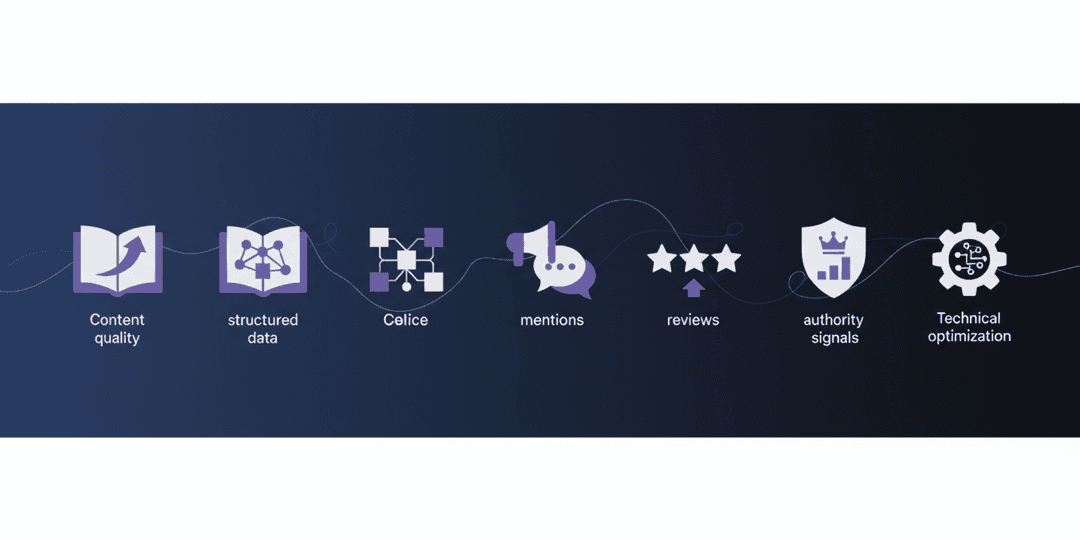
Effective GEO spans content strategy, technical implementation, reputation management, and third-party mention building. The best agencies coordinate across all these areas rather than treating them as separate workstreams.
An agency that treats GEO as just “write better content” or just “get more reviews” is missing the bigger picture. As we covered in our reviews and AI piece, even reputation management is a GEO signal. A strong agency integrates all the signals into a cohesive strategy.
Red flags: what most agencies get wrong
Knowing what to avoid is just as important as knowing what to look for. Here are the most common red flags:
“We’ll get you mentioned by ChatGPT.” No agency can guarantee specific AI outputs. AI models are probabilistic systems — no one controls what they say. An agency promising specific AI mentions is either dishonest or doesn’t understand how AI works. The credible promise is: “We’ll systematically improve the signals AI models use to decide who to recommend.”
No AI-specific measurement. If their reporting only includes traditional SEO metrics (rankings, organic traffic, backlinks) without AI citation tracking, they’re not doing GEO. They’re doing SEO and calling it GEO.
All content, no technical. Content is essential but insufficient. If the agency can’t discuss structured data, schema markup, or technical implementation, they’re covering maybe 40% of GEO. The technical gaps are often what separates brands AI can recommend from brands AI overlooks.
Proprietary “AI ranking tools” with no transparency. Some agencies claim proprietary technology for “ranking in AI” but won’t explain how it works. AI visibility can be measured with manual audits and spreadsheets. Fancy tools are nice but not necessary — and if an agency hides behind them, they may be hiding a lack of methodology.
No understanding of AI model differences. ChatGPT, Gemini, and Perplexity each process information differently. An agency that treats “AI search” as a monolith doesn’t understand the landscape well enough to optimize for it.
Questions to ask before you sign
Before committing to a GEO agency, ask these questions and evaluate the depth of their answers:
“Walk me through your GEO methodology step by step.” A strong agency can explain their process in detail — from audit to strategy to implementation to measurement. Vague answers indicate vague methodology.
“How do you measure AI visibility, and how often do you report on it?” Look for specifics: query lists, platform coverage, measurement cadence, reporting format. Anything less than monthly AI citation tracking is insufficient.
“Show me a case study with AI-specific results.” If they can only show SEO results, they haven’t proven GEO capability. It’s that simple.
“How do you approach third-party mention building?” Listen for systematic processes: directory strategy, earned media outreach, community engagement, review generation. “We create great content and hope people share it” is not a mention strategy.
“What technical GEO work do you implement?” Schema markup, heading hierarchy audits, llms.txt, content architecture improvements. If the technical component is limited to “we optimize your meta tags,” they’re not doing GEO.
Frequently asked questions
How much does GEO cost compared to SEO?
GEO typically requires a similar or slightly higher investment than SEO because it includes additional workstreams (third-party mention building, AI citation tracking, technical schema implementation). Expect to invest 10-30% more than a comparable SEO engagement, though the additional channels covered often make GEO the higher-ROI investment.
Should I hire a separate GEO agency or add GEO to my existing SEO agency?
If your current SEO agency has developed genuine GEO expertise (test them with the criteria above), adding GEO to the existing relationship is more efficient. If they’re rebranding SEO as GEO without new methodology, you’re better served by a dedicated GEO partner who can complement your existing SEO work.
How soon should I expect results from a GEO agency?
Meaningful AI visibility improvements typically require 3-6 months of consistent work. Technical implementation (structured data, content architecture) can show impact within weeks on search-augmented AI platforms. Third-party mention building and content authority are longer plays that compound over time. Be skeptical of any agency promising results in under 90 days.
Can I do GEO myself instead of hiring an agency?
Absolutely — and this entire series is designed to help you do exactly that. The measurement framework, technical implementation guide, and best practices playbook give you everything needed. An agency makes sense when you need faster execution, deeper technical resources, or don’t have the internal bandwidth to manage it consistently.
The bottom line
The GEO agency market will mature rapidly over the next year. Right now, the gap between agencies with genuine expertise and agencies riding the hype is wide. Use the five criteria in this guide to evaluate potential partners, watch for the red flags, and ask the hard questions before committing.
The right GEO partner can accelerate your AI visibility dramatically. The wrong one will waste your budget on repackaged SEO. The difference comes down to methodology, measurement, and technical depth.
Looking for a GEO agency that checks every box? Our generative engine optimization services include everything covered in this series — from technical implementation to third-party mention strategy to ongoing AI visibility measurement. We built the methodology, and the results speak for themselves.